
The foremost condition for preventing a third world war is the ideological defeat of neo-fascism! - Dr. Wasantha Bandara, General Secretary of the Patriotic National Movement

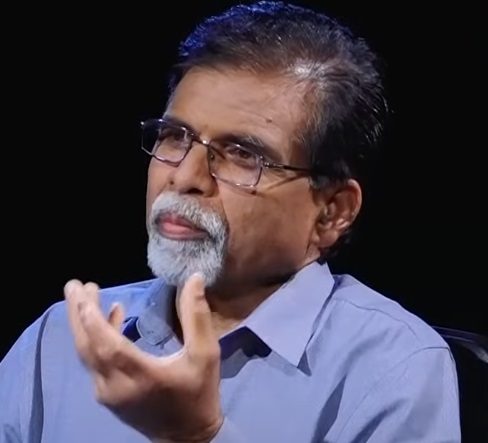 This year marks the 80th anniversary of both the victory of the Chinese People’s War of Resistance against Japanese Aggression and the World Anti-Fascist War. In recognition of this significant occasion, the Lanka Leader News website is publishing a series of articles. As part of this series, we present a discussion with Dr. Wasantha Bandara, General Secretary of the Patriotic National Movement. Below is the written transcript of the interview.
Question: This year marks the 80th anniversary of
the end of World War II. In a recent press release, you highlighted both the
victory of the Chinese people’s war of resistance against Japanese aggression
and the broader triumph of the world anti-fascist struggle. While much
attention is given to the Soviet Union’s defeat of Nazi Germany, China’s role
in securing victory in World War II is less well known. Could you elaborate on
the contribution you referred to in your statement?
Dr. Wasantha Bandara: Yes. The year 2025 marks the 80th
anniversary of the defeat of Hitler’s fascist Nazi Germany, which unleashed
World War II—an event that present-day Russia commemorates with great pride.
Three main countries fostered fascism during that war: Germany, Japan, and
Italy. Later, Romania, Hungary, and Bulgaria also joined this alliance. Ukraine,
which today is being used by the West as a battlefield against Russia, too
aligned with this axis at the time. Germany and Italy sought dominance in
Europe, while Japan aimed to establish control over East Asia. Just as Nazi
Germany inflicted inhuman atrocities on Jews and Soviet Russians, imperial
Japan carried out immense barbarities across East Asia—where China bore the
brunt of this brutality and made enormous sacrifices in its resistance.
Question: Are you suggesting that
China’s role in defeating the fascist alliance during World War II was greater
than that of the Soviet Union?
Dr. Wasantha Bandara: No. The commitment of both China and
the Soviet Union to defeating fascism was beyond comparison. The sacrifices
they made for the survival of human civilization were unparalleled. To try to
weigh one against the other, in my view, is apolitical. What I wish to
highlight is that a group of Chinese youth, who began as a small study circle
in 1921, confronted the Japanese invasion despite China’s deep internal
divisions, and within just four years after the war, led their nation to
victory in the socialist revolution. This achievement marks an important
milestone in the global struggle for peace, anti-imperialism and socialism. We
stand with the Chinese people in commemorating both their victory in the war of
resistance against Japanese aggression and the broader victory of the world
anti-fascist struggle—because the uniqueness of that commemoration carries
profound significance for the challenges facing the world today.
Question: Could you explain the
significance of this event?
Dr. Wasantha Bandara: To truly understand its significance,
we must first revisit the Japanese invasion of China. While World War II is
traditionally dated to September 1, 1939, when Hitler’s fascist Nazi Germany
invaded Poland, many historians contend that it began earlier with Japan’s
aggression against China. Some mark July 7, 1937, when Japan launched a
full-scale invasion, as the true beginning. Others trace it back even further to
September 18, 1931, when the Japanese Emperor staged a false-flag incident to
justify creating the puppet state of Manchukuo and occupying Manchuria. In this
sense, a major member of the fascist alliance had already invaded China seven
years before the war officially began.
The Japanese Imperial Army, driven by a ruthless disregard for humanity,
carried out a series of atrocities that in many respects rivaled—or even
surpassed—those of Nazi Germany. These crimes continued until Japan’s
unconditional surrender on August 15, 1945. The human cost to China was
staggering.
More than 30 nations were directly involved in World War II, and historians
estimate that over 100 million people perished. Of these, between 50 and 85
million were civilians in China and the Soviet Union—revealing the immense
sacrifices these two nations made for the survival of humanity. At a
commemorative ceremony in Colombo on August 20, marking the Chinese people’s
victory in their war of resistance against Japanese aggression and the broader
global anti-fascist struggle, Chinese Ambassador to Sri Lanka Qi Zhenhong
reminded us that 35 million Chinese lives were lost during the World War II.
Question: While we acknowledge the
immense loss of Chinese lives during World War II, why, 80 years after the
war’s end, should we celebrate the Victory Day of China’s resistance against
Japanese aggression that ultimately expelled the Japanese imperial army?
Dr. Wasantha Bandara: Your question is an important one,
and I will approach it from a broader historical perspective.
Military historians note that biological and chemical warfare has a long,
disturbing history. In the 6th century BC, the Assyrians allegedly poisoned
wells used by their enemies with rye ergot. In the 4th century BC, Scythian
archers are said to have coated their arrows with the venom of snakes and
decaying corpses. In 1347, the Mongols who invaded Caffa (in Crimea) reportedly
used catapults to hurl plague-infected corpses into the city, helping spread
the Black Death throughout Europe. During the colonization of the Americas
between the 15th and 18th centuries, smallpox-infected “blankets” were given to
Native Americans, causing devastating epidemics.
With the advent of germ theory in the 19th and early 20th centuries,
biological warfare became more “scientific.” In World War I, Germany reportedly
attempted to infect Allied livestock with anthrax and glanders bacteria.
However, the most horrifying cases occurred in World War II, through the
actions of infamous Unit 731, stationed in Japanese-occupied Manchuria, China.
There, Chinese civilians and prisoners of war were deliberately infected with
anthrax, cholera, and other diseases. Infected fleas were released into cities.
Tens of thousands of Chinese lives were lost as a result of these inhumane
acts. Yet, despite the scale of these crimes, there has been little serious
global discussion about them.
Question: But we are now in the
second decade of the 21st century, and biological weapons are banned under
international law. Many would say that the Japanese people have already moved
on from this dark chapter of history. So why revisit a past that some believe
should be forgotten?
Dr. Wasantha Bandara: The world today is far from as stable
or peaceful as it may seem. Economic crises similar to those that triggered the
First and Second World Wars are now emerging in the United States and Western
countries. At the same time, BRICS countries—Russia, China, India, Brazil, and
South Africa—are forming new power centers on the global stage. Currently, the
collective West is waging a proxy war against Russia from Ukrainian territory,
while the United States engages in a tariff war targeting China. Political
analysts warn that the next “Ukraine” could be Taiwan, and the next “Russia”
could be China. Meanwhile, the Gaza Strip has become a humanitarian
catastrophe, attempts have been made to destabilize Iran, and the United States
seeks to escalate its sanctions against Venezuela into potential military
pressure. For nearly six decades, unjust sanctions have also been imposed on
Cuba, a nation committed to non-violence.
Beyond these immediate conflicts, the COVID-19 pandemic has triggered what
some call a global “Reset.” Notably, Bill Gates predicted in 2015 the pandemic
that emerged in March 2020. The same forces have suggested that up to 50% of
the world’s population must perish for the survival of humanity.
Adding to this, U.S. Representative Tulsi Gabbard recently revealed that the
security clearances of 37 current and former intelligence officers were revoked
due to allegations of intelligence manipulation and politicization. According
to Gabbard, this was an initial step to remove operatives of the so-called
“Inner State” or deep state within the United States. The list included
prominent figures such as former Deputy Director of the NSA Richard Ledet,
former Assistant Secretary of State for Intelligence Brett Holmgren, and former
Principal Deputy Director of the DNI Stephanie O’Sullivan. Gabbard described
the situation as a “cleansing operation” within the intelligence community,
addressing what she called a complete “pockets” within U.S. intelligence agencies.
Overall, it is clear that a vast network of corporations and powerful actors
is manipulating global tensions to serve its own interests. The world is far
more complex and precarious than it may appear.
Question: But why do you suspect that
the crimes committed by the former Japanese empire in China could be repeated
elsewhere by present-day Japanese people?
Dr. Wasantha Bandara Rather than
hastily claiming that such actions will be repeated, I would emphasize that the
fascist tendencies that existed 80 to 100 years ago still persist among the
powerful elements of Japanese society. Imperialist forces are attempting to
glorify fascism, not only within Japan but across the world.
A similar situation can be seen in Ukraine today. For example, the UN
Charter on the Rights of Peoples and Religion is being blatantly violated
inUkraine. The Ukrainian Constitution still contains provisions fully guaranteeing
the rights of the Russian language, as well as the rights of other ethnic
minorities. Yet President Zelensky has introduced laws banning the use of
Russian in all spheres of both state and private life.
Political leaders from various countries, representing the current ruling
class in Ukraine—such as Ursula von der Leyen, Emmanuel Macron, Keir Starmer,
Friedrich Merz, and Olaf Scholz—have largely ignored this reality. This is an
example of how imperialist powers allow fascist tendencies to grow unchecked.
Question: Could you elaborate on the
fascist tendencies present in Japan today?
Dr. Wasantha Bandara: Absolutely. The Japanese invasion
caused immense suffering for the Chinese people, yet China has extended a hand
of friendship to Japan. Despite this, the behavior of the Japanese government
and certain extremist elements on August 15—the 80th anniversary of the Chinese
people’s resistance against Japanese aggression—reveals persistent fascist
tendencies within Japanese society.
On that day, Japanese Prime Minister Shigeru Ishiba made a ceremonial
offering at the Yasukuni Shrine, which directly honors Japan’s wartime
militarism and invasion of China. According to Japan’s Kyodo News Agency, this
was done “in a move aimed at appeasing his party’s conservative support base.”
Japanese Agriculture Minister Shinjiro Koizumi and Finance Minister Katsunobu
Kato also visited the shrine, marking the first such visit by cabinet ministers
since Ishiba came to power. Former Economy and Defense Ministers Sane Takaichi
and Takayuki Kobayashi were also present.
Beyond individual politicians, Japanese right-wing groups reportedly
gathered in large numbers to celebrate the emperor’s invasion of China.
Vehicles with barricades and banners lined the streets, creating a striking
militaristic image, as noted even by psychiatrists.
Newspaper reports also highlighted right-wing activists outside Kudanshita
Station near the Yasukuni Shrine, displaying anti-Chinese signs and waiting for
politicians to arrive. Some wore uniforms reminiscent of the former Imperial
Japanese Army or kamikaze pilots, while others held nationalist slogans,
underscoring the aggressive attitudes still present in Japanese society. The
participation of several right-wing regional lawmakers further intensified the
seriousness of the situation.
Question: Why can’t this be dismissed
as merely the extremist behavior of a small minority of Japan’s far-right
groups?
Dr. Wasantha Bandara: This is clearly not a matter of a few
right-wing extremists acting irrationally. The Japanese Empire’s Unit 731
committed extraordinarily inhumane acts against the Chinese people on Chinese
soil, conducting research on biological weapons specifically targeting
civilians.
The only surviving member of Unit 731 today is Hideo Shimizu. In March 1945,
not yet 15 years old, he was sent to the Japanese military camp in Harbin,
China, as one of the last teenage recruits of Unit 731. In 2024, Shimizu
publicly recounted his experiences in Harbin. According to him, on August 12,
1945, he was ordered to transport explosives and destroy evidence of Unit 731’s
crimes before the retreat. By nightfall on August 14, he fled China with the
defeated Japanese forces.
During his more than four months at Unit 731, Shimizu witnessed rows of
formaldehyde-filled jars containing fetuses, infants, human hands, and other
organs. “We unleashed a great atrocity on the Chinese people. We dissected them
alive,” he confessed. Seventy-nine years later, in 2024, at age 94, Shimizu
returned to Harbin—his first trip abroad and his first return to China since
World War II—to publicly apologize to the Chinese people.
Japanese authorities tried to prevent Hideo Shimizu and others from
establishing a museum to commemorate the crimes committed by the Japanese
imperial army in China. Eventually, the museum was allowed to display the
artifacts—but without explanatory information boards. Shimizu reflected, “Is my
apology enough? Can everything be undone with just my apology?”
I echo this concern. The emerging fascism in the world today cannot be countered with mere emotional gestures. The dignity of humanity can only be safeguarded by confronting history. Only by learning the lessons of the past can we build a future free from repetition of its mistakes. Defeating the resurgence of fascism must be at the top of our political agenda. Indeed, the fundamental precondition for preventing a Third World War is the ideological defeat of neo-fascism.
Conversation Transcript: Jeewantha Jayatissa
Dr. Wasantha Bandara, the General
Secretary of the Patriotic National Movement, is a dentist by profession. He
started his political career as an activist in the student wing of the
Communist Party of Sri Lanka. He was also an activist in the Medical Students'
Union. During the 80s, when the Janatha Vimukthi Peramuna ( People’s Liberation
Front) was engaged in underground politics, he was closely associated with JVP
founder Rohana Wijeweera. He has completed the Australian Diploma in Financial
Management, Postgraduate Diploma in Financial Management (ICASL), Postgraduate
Diploma in Health Services Management (Massey University NZ), Postgraduate
Diploma in Quality Management (Quality Council NZ) and Diploma in Private
Management (CPM-UK).
සම්බන්ධිත පුවත් | Related News



ප්රධාන පුවත්
ඉරාන තෙල් නැව්වලට සහන දීම ගැන ශ්රී ලංකාව අර්බුදයක.. අවසන් තීරණයක් ගෙන නැති බව TIMES OF INDIA වාර්තා කරයි..
නව ත්රස්ත පනතෙන් මානව හිමිකම් දැඩි ලෙස උල්ලංඝනය වීමේ අවදානමක්.. - ඇම්නෙස්ටි ඉන්ටර්නැෂනල්
පොලිස්පතිවරයා අධිකරණයට අපහාස කළ බව ප්රකාශ කරමින් ගම්පහ මහේස්ත්රාත්වරයා අදාළ ලිපිගොනු අභියාචනාධිකරණයට ඉදිරිපත් කරයි..
ශ්රී ලංකන් ගුවන් සේවයේ පද්ධතිවලට අනවසරයෙන් රිංගූ හැකර්ලා ඩොලර් 50,000ක කප්පමක් ඉල්ලලා.. - දයාසිරිගෙන් හෙළිදරව්වක්..
ප්රංශය ඇතුළු යුරෝපා රටවල උග්රවන ආර්ථික අර්බුදය සහ ජනතා විරෝධය ගැන ආචාර්ය ජගත් චන්ද්රවංශගෙන් අනාවරණයක්..
බුද්ධ ශාසන ඇමති අනුරාධපුර පූජා නගරය පිළිබඳ අර්ධ සත්යය මගින් විනාශකාරී මහා සත්යය සඟවනවා.. - ජාතික සංවිධානවලින් චෝදනා
භික්ෂූන් වහන්සේලා පාගමන පැවැත්වූවේ ආණ්ඩුව පෙරළන්න නෙවෙයි.. බුදු දහම, බුද්ධ චීවරය සහ මෙරට ඓතිහාසික වටිනාකම රැකගැනීම වෙනුවෙන්.. - මහාචාර්ය පූජ්ය කොටපිටියේ රාහුල හිමි
"විධායකයට විශාල බලයක් ලබාදීලා.. මහෙස්ත්රාත්වරයා රබර් මුද්රාවක් වෙලා": ත්රස්තවාදයෙන් රාජ්ය ආරක්ෂා කිරීමේ පනතට ශ්රේෂ්ඨාධිකරණයේදී පෙත්සම්කාර පාර්ශ්වයෙන් දැඩි විරෝධතා
අනුරාධපුර බුලන්කුලම වැව් රක්ෂිතයෙන් අක්කර 200ක් නිලධාරීන් අතර බෙදාදීමේ ක්රියාවලිය ප්රශ්න කරමින් දේශහිතෛෂී ජාතික ව්යාපාරයෙන් කෘෂිකර්ම ඇමති ලාල් කාන්තට ලිපියක්
ඉරානය නව වෙළෙඳ මාර්ගයේ ප්රධාන දුම්රිය සම්බන්ධතාවක් සම්පූර්ණ කරයි (වීඩියෝ)
කියුබාවේ හිටපු ජනාධිපති රාවුල් කස්ත්රෝ අත්අඩංගුවට ගැනීමට ඇමෙරිකානු ප්රාන්තයකින් වරෙන්තුවක්
ඇමරිකානු ජනපති ට්රම්ප් සහ රුසියානු ජනපති පුටින් අතර පැවති විනාඩි 90ක රහස් කතාබහේ ඇතුළාන්තය.. - ශ්රී ලංකා කොමියුනිස්ට් පක්ෂයේ ප්රධාන ලේකම්ගෙන් විශේෂ අනාවරණයක්..
මහ සඟරුවනට නින්දා අපහාස කරන නිරාගමික යූටියුබ් කරුවන්ට එරෙහිව අපරාධ පරීක්ෂණ දෙපාර්තමේන්තුවෙන් පරීක්ෂණයක්..
මුහුද යට කේබල් සහ AI මධ්යස්ථාන ඉලක්ක කර ගනිමින් ඉරානයෙන් දැවැන්ත යුද සූදානමක්!..
ඥානසාර හිමියන්ගේ සිවුර ගලවා ආණ්ඩුව රටට දෙන පණිවිඩය ගැන ප්රවීන මාධ්යවේදී ධර්මශ්රී ගෙන් අනාවරණයක්..
බෝධිසත්ව ගුණ නොමැති පුද්ගලයන් රජ නොවිය යුතුයි.. රජකම ලැබෙන්නේ චීවරය රකින්නයි..- අස්ගිරියෙන් ප්රකාශයක්..