
Reimagining a Living Sacred City or Treating It Like a Theme Park?

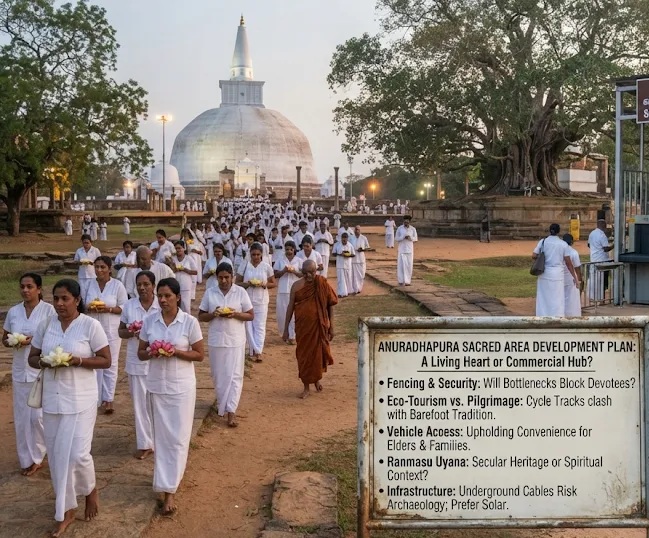 Anuradhapura is not a museum frozen in amber; it is a living, breathing spiritual heartland where centuries of devotion meet everyday local life. Any development plan for the Sacred Area carries a heavy responsibility: to improve devotee facilities and protect fragile archaeology, without turning quiet pilgrimage spaces into a commercialized tourist attraction or an administrative bottleneck. The Gazetted Declaration of the Updated Anuradhapura Sacred Area Development Plan falls short of that balance. From flawed security logistics and questionable infrastructure choices to drafting oversights and an erosion of sacred character, the plan raises serious questions about who and what it is truly designed to serve.
Security Checkpoints, Fencing, and Crowd Realities
A major concern with any perimeter fencing in the Sacred Area is the gap between paper security and real-world crowd dynamics. If the proposed fence is erected, can planners treat a simple barrier as a complete solution? "Just a silly fence won't be enough" to ensure the protection of the most sacred site in Anuradhapura for example, when thousands of pilgrims and visitors arrive daily, especially during full-moon Poya days and major festivals. Arrangements must be made for devotees and visitors to go through pat-downs, bag searches, and metal detectors—similar to high-security temple precincts elsewhere in the country.
Security checkpoints need to be positioned thoughtfully where people alight and move toward the sacred site, ideally right at the point where they step off transport and enter the approach roads, or slightly further back to prevent bottlenecks. More importantly, one or two bottlenecked gates would create severe congestion and frustration. Planners must calculate the minimum number of security lanes and entrances needed for peak daily footfall before locking in physical barriers, ensuring that safety measures do not turn a stunningly spiritual pilgrimage into a sluggish queue.
Mobility, Vehicle Access, and Eco-Tourism Priorities
The plan's push toward cycle tracks and an "eco-tourist zone" misreads how Anuradhapura functions. Dedicated cycle tracks are unnecessary here; the Sacred Area is a place of pilgrimage, reflection, and historical reverence, not a recreational park built around cycling loops. Pushing recreational cycling risks clashing with barefoot devotees, elderly pilgrims, and solemn processions.
Equally troubling is any move that restricts ordinary visitors and families from arriving in their own vehicles. Convenience and dignity matter for locals and pilgrims traveling long distances—especially older relatives, families with young children, differently-abled people, or those carrying offerings. Reframing the precinct around eco-tourism and lowering or removing customary religious boundaries threatens to strip the area of its sacred solemnity in favor of leisure-driven tourism.
Ranmasu Uyana and the Risk of Secularizing Heritage
Separating Ranmasu Uyana from the wider religious fabric of the Sacred Area is another concerning direction in policy. Ranmasu Uyana is home to ancient hydraulic engineering, rock formations, and the famous Sakwala Chakraya carving, which sit intimately within an ancient cultural and spiritual landscape alongside monastic and royal heritage. Treating it merely as a standalone garden or casual recreational park risks separating the site from its deeper historical and cultural context which contains more value than simply identifying it as a scenic backdrop for tourists.
Infrastructure Choices and Drafting Blind Spots
Several technical and regulatory proposals in the gazetted development plan are poorly thought out or incomplete:
* Underground cables vs. solar lighting: The proposal for underground cabling for any purpose in an ancient and archaeologically sensitive area is highly questionable. Digging trenches risks disturbing unexcavated heritage, ancient drainage or water channels, and fragile roots, while creating costly maintenance problems down the line. Where lighting is genuinely needed, erecting solar lamp posts is a far lighter, cleaner, and less invasive option that should be considered.
* Poorly worded provisions (such as Section 1.1.2): Ambiguous or loosely drafted clauses invite conflicting interpretations, disputes over boundaries or permissible uses, and administrative overreach. A gazetted development plan declaration demands crisp, unmistakable legal language.
* Misclassifying monastic water bodies (Section 1.7): Several tanks and ponds within or adjoining the precinct are historically linked to monasteries rather than to ordinary municipal commons. Categorizing them broadly as general natural resources for local residents and pilgrims overlooks monastic stewardship and heritage conservation rules.
* Missing land-use essentials (Section 1.14): The development plan leaves glaring gaps in how it addresses commercial and community uses. While several establishments are explicitly prohibited in the document, the plan fails to explicitly prohibit spas, abattoirs, and pet shops — activities that have obvious spatial, environmental, and/or religious implications within a sacred zone. The development plan also noticeably overlooks pre-existing nurseries/schools and the rules surrounding the construction of new ones which could have significant future implications for the sacred area if not explicitly detailed.
* Unspecified university under special projects (Section 3.4): Listing "special projects" involving a university without naming which institution is involved creates uncertainty around governance, land use, academic purpose, and public accountability.
* Silence on prohibiting animal sacrifice: Given Anuradhapura's profound Buddhist heritage and the religion's ethos of non-violence (ahimsa), the absence of an explicit prohibition on animal sacrifice within the Sacred Area is a striking omission that should be stated without ambiguity.
A Broader Test of Stewardship
Beyond individual clauses, a credible plan for Anuradhapura must start from a clear hierarchy of values: first, protect the sanctity, quiet dignity, archaeological integrity and accessibility of the site for historical preservation and worship; second, serve the practical needs of the monastics, devotees and local residents; third, allow for some reasonable accommodation of tourism. Without fixing its logistical blind spots, tightening its drafting, and respecting the sacred identity of the city, the updated development plan risks imposing modern bureaucratic and tourist templates onto a timeless heritage site that deserves far greater care and attention.
- Compiled by Ayanthi and Yasas
සම්බන්ධිත පුවත් | Related News


ප්රධාන පුවත්
2027 අයවැය දෙවැනිවර කියවීම සම්මතයි - පක්ෂව 157.. විපක්ෂව 60යි..
ෂෙන්ෂෙන් බලවතුන්ගේ හමුව ලෝකය බෙදාගැනීමට ද?.. – ආචාර්ය ජගත් චන්ද්රවංශගෙන් අනාවරණයක්
වෙස්මුහුණු ගැලවුණු යුරෝපීය යුක්තිය: අර්බුදයකට මැදි වූ ජාත්යන්තර අපරාධ අධිකරණය..
උද්ධමනය 9%ක් දක්වා ඉහළ යා හැකියි.. - මහ බැංකු අධිපති කියයි
මාළුවකු ලබාදීම මෙන්ම මාළු ඇල්ලීමට අවශ්ය හැකියාව ද ලබාදීම යන ආදර්ශය ශ්රී ලංකාව තුළ ප්රවර්ධනය කිරීමට අපි බලාපොරොත්තු වෙනවා- ශ්රී ලංකාවේ චීන තානාපති ගරු Wei Huaxiang මැතිතුමා
ජනපති අනුර පළාත් සභා ඡන්ද නොපවත්වා 2029 ජනාධිපතිවරණයට තනි අශ්වයාගේ රේස් එකක් සැලසුම් කරනවාද?.. - ධර්මශ්රී ගෙන් අනාවරණයක්..
2027 අයවැය දෙවන වර කියවීමේ ඡන්ද විමසීම අද..
NPP ආණ්ඩුවේ ප්රගතිය එකමිටට කියපු ඩී.වී. චානක..
"මාතලේ අළු විහාරයේ ප්රේරණ කලාපයේ හදපු පල්ලියක් ලොකු කරන්න අවසර දීලා.. පුරාවිද්යා අධ්යක්ෂක ජනරාල් පුරාවිද්යා පනත උල්ලංඝනය කරලා.." - වෛද්ය වසන්ත බණ්ඩාර
ශ්රී පාද මාවත වනජීවී දෙපාර්තමේන්තුවට අයත් නැහැ.. එය මහජනතාව සතුයි.. - ශ්රී පාදස්ථානාධිපති හිමි
2035 වන විට ඉස්ලාම් ආගම ලොව විශාලතම ආගම බවට පත්වන බවට පිව් පර්යේෂණ මධ්යස්ථානයෙන් පුරෝකථනයක්..
අමෙරිකා, රුසියා, චීන බලවතුන්ගේ ත්රෛපාර්ශ්වික සාකච්ඡාව අද..
ඥානසාර හිමියන්ගේ චීවරය ඉවත් කිරීමට එරෙහි රිට් පෙත්සම් විභාගය නැවත කැඳවීම දෙසැම්බර් 01 වැනිදා..
ටෙන්ඩර් කැඳවීමක් නැතිව ඊශ්රායලයෙන් හදිසියේ ඩ්රෝන යානා මිල දී ගන්නේ ඇයි?.. - ධර්ම ශ්රී කාරියවසම්ගෙන් අනාවරණයක්..
චීවරධාරී රාජාංගනයේ සද්ධාරතන අත්අඩංගුවට..
ගෝලීය බලවතුන් තිදෙනාගේ ඓතිහාසික හමුවෙන් සාකච්ඡා වන ප්රධාන මාතෘකා මොනවාද?..