
China at 77: A National Day Marked by Transformation, Development and a Changing World

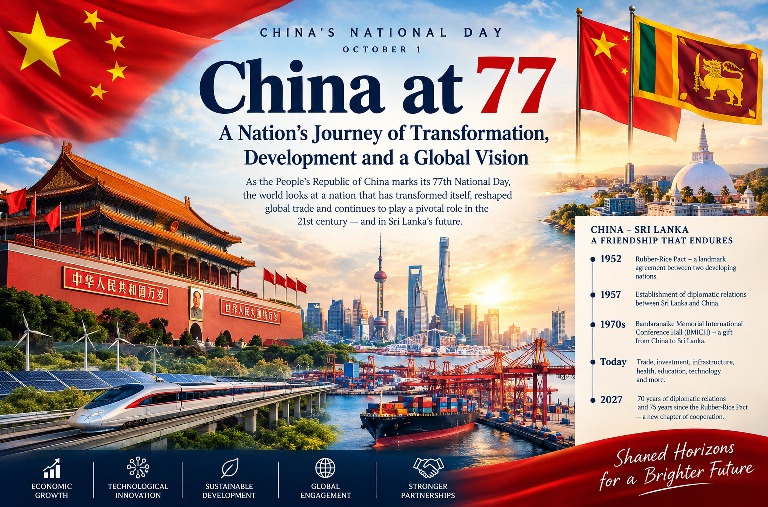 As the People's Republic of China marks its 77th National Day on October 1, the country looks back on more than seven decades of profound economic and social transformation while continuing to define its role in an increasingly interconnected world.
The People's Republic of China was founded on October 1, 1949, when Mao Zedong announced the establishment of the People's Republic from Tian'anmen in Beijing. Since then, October 1 has been observed annually as China's National Day.
Seventy-seven years later, the significance of the day extends beyond the commemoration of the founding of a state. It provides an opportunity to examine the transformation China has undergone and the country's evolving relationship with the rest of the world.
From reconstruction to economic transformation
The first decades after 1949 were dominated by reconstruction, industrialisation and the development of basic national economic and social infrastructure.
A major turning point came after the introduction of reform and opening-up policies in the late 1970s. China gradually expanded market-oriented reforms, encouraged foreign investment and international trade, and strengthened its links with the global economy.
Over subsequent decades, China experienced rapid economic growth and became a major manufacturing and trading power. Hundreds of millions of people were lifted from extreme poverty during the country's long period of economic expansion, while urbanisation, infrastructure development and technological capacity expanded significantly.
China's development has also increasingly moved toward advanced manufacturing, digital technologies, artificial intelligence, renewable energy, electric vehicles, high-speed rail and other areas of technological innovation.
A major player in global trade
China has become one of the world's largest trading economies, with its economic relationships extending across Asia, Africa, Europe, Latin America and other regions.
The country's role in global supply chains has made developments in the Chinese economy relevant well beyond its borders. Changes in Chinese demand, industrial policy, investment and trade can influence commodity markets, manufacturing industries and developing economies.
China has also promoted initiatives intended to increase connectivity and economic cooperation, most prominently through the Belt and Road Initiative (BRI).
The initiative has resulted in infrastructure and connectivity projects involving ports, roads, railways, energy, telecommunications and other sectors in countries across different regions.
Supporters describe such cooperation as contributing to infrastructure development and economic connectivity, while critics have raised questions concerning financing, debt and strategic implications. The differing assessments remain part of the wider international debate surrounding China's growing overseas economic role.
Technology and the next stage of development
China's development agenda has increasingly emphasised technological self-reliance and innovation.
The country has invested heavily in artificial intelligence, semiconductor technologies, telecommunications, robotics, aerospace, electric vehicles, batteries and renewable energy.
Chinese companies have become important international players in several of these industries. The rapid expansion of China's electric-vehicle and battery sectors, for example, has changed competition in the global automobile industry.
China has also become a major participant in space exploration. Its space programme includes crewed missions, lunar exploration and the development of its own space station.
These developments illustrate a broader transition in the Chinese economy—from an earlier emphasis on low-cost manufacturing toward higher-value manufacturing, scientific research and technological innovation.
China's international outlook
China's increasing economic and technological weight has been accompanied by a larger role in international institutions and multilateral groupings.
Beijing has repeatedly advocated a stronger role for multilateralism and greater representation for developing countries in global governance.
China is a permanent member of the United Nations Security Council and a member of organisations and groupings including the G20, BRICS, the Shanghai Cooperation Organisation and the Asia-Pacific Economic Cooperation forum.
The Chinese government has also promoted concepts such as the Global Development Initiative, Global Security Initiative and Global Civilization Initiative as elements of its approach to international cooperation.
At the same time, China's expanding influence has become a central issue in international politics. Relations between China and the United States, questions surrounding Taiwan, maritime security, trade restrictions and technology competition remain important areas of international debate.
A longstanding friendship with Sri Lanka
For Sri Lanka, China's National Day also carries particular bilateral significance.
Sri Lanka and the People's Republic of China established diplomatic relations on February 7, 1957. The relationship has subsequently developed across political, economic, cultural, educational, health, infrastructure and defence-related fields.
One of the historic foundations of the relationship was the Rubber-Rice Pact of 1952, concluded five years before the establishment of formal diplomatic relations.
The agreement became an important early example of economic cooperation between two developing countries during a period of major international political and economic change.
In the decades that followed, Chinese assistance contributed to several major Sri Lankan development projects. Among the best-known examples is the Bandaranaike Memorial International Conference Hall (BMICH) in Colombo, presented to Sri Lanka by China in the early 1970s.
China has subsequently become an important trading partner, investor and development partner for Sri Lanka. Cooperation has extended to infrastructure, ports, transport, health, education, agriculture, technology and disaster assistance.
The Colombo Port City project and developments connected with Hambantota have also placed China prominently in discussions about Sri Lanka's future economic connectivity.
Looking toward 2027
The relationship is approaching another symbolic milestone.
2027 will mark 70 years since Sri Lanka and China established diplomatic relations, while also marking 75 years since the signing of the Rubber-Rice Pact.
The two anniversaries provide an opportunity for both countries to look back at the evolution of their relationship and consider areas for future cooperation.
For Sri Lanka, cooperation with China exists within a broader foreign-policy framework involving relations with India, Japan, the United States, Europe, Russia, ASEAN and other international partners.
For China, Sri Lanka occupies a strategically important position in the Indian Ocean, while for Sri Lanka, engagement with China is one component of its broader economic and diplomatic relationships.
A country still undergoing transformation
China's story since 1949 cannot be reduced to a single measure of economic growth. It encompasses industrialisation, urbanisation, poverty reduction, technological development, education, infrastructure expansion and the emergence of a much larger role in international affairs.
At the same time, China faces significant challenges, including demographic changes, economic restructuring, property-sector pressures, employment concerns, technological competition and the complexities of an increasingly contested international environment.
National Day therefore provides both an occasion for celebration and an opportunity to assess the country's continuing transformation.
For the rest of the world, China's trajectory matters because of the country's enormous economic scale, technological capabilities, trading relationships and expanding international engagement.
For Sri Lanka, the anniversary provides an opportunity to reflect on a relationship that has developed over more than seven decades and is now entering another important chapter.
As China marks its 77th National Day, its experience since 1949 remains one of the most consequential development stories of the modern era — and its future trajectory will continue to have implications far beyond China's borders.
සම්බන්ධිත පුවත් | Related News



ප්රධාන පුවත්
ඉරාන නෞකා 19කට සැපයුම් දුන්නොත් සම්බාධක.. අමෙරිකාවෙන් ශ්රී ලංකාවට දන්වයි..
ශ්රී ලංකාවේ ආයෝජන පරිසරය තවමත් සුදුසු මට්ටමක නැහැ.. නායකයන්ගේ පරස්පර කතා නිසා ආයෝජකයන් දෙගිඩියාවෙන්.. – අමෙරිකානු රාජ්ය දෙපාර්තමේන්තුවෙන් වාර්තාවක්
ෆ්ලයි ඩුබායි ගුවන් යානයේ සිදුවීම වැරදුණ කුරුමානමක්ද? - ආචාර්ය ජගත් චන්ද්රවංශගෙන් අනාවරණයක්..
SDIG රන්මල් ඇතුළු පොලිස් නිලධාරින් පිරිසකගේ ස්ථාන මාරුවීම් මහාම ක්රියාත්මක වන පරිදි පොලිස් කොමිසමෙන් අවලංගු කරයි..
ගෝලීය AI තරගයේ බලතුලනය වෙනස් කිරීමට චීනයෙන් දැවැන්ත පියවරක්.. ජාත්යන්තර සහයෝගීතාව සහ ජාතික ආරක්ෂාව එකට ගෙන තීරණාත්මක උපායමාර්ගය එළිදක්වයි..
බ්රිතාන්යය නැවතත් යුරෝපා සංගමයට එක්වීමේ ඉඩක්.. – අග්රාමාත්ය ඇන්ඩි බර්න්හැම්ගෙන් පැහැදිලි සංඥාවක්..
"ආණ්ඩුවට 159ක බලයක් තියෙද්දී රාජ්ය බලය නෑ කියන්නේ විහිළුවක්" – වෛද්ය වසන්ත බණ්ඩාර
සුරේෂ් සලේ රඳවා තබා ගැනීම සම්බන්ධයෙන් UN වෙතින් ශ්රී ලංකා රජයට දැඩි ප්රශ්නාවලියක්..
ශ්රී ලංකාවේ වෙළඳ හිඟය ඩොලර් බිලියන 6.5 පනී - 69%ක සීඝ්ර ඉහළ යාමක්!
සාර්ව ආර්ථික ස්ථාවරත්වය මත මීළඟ IMF වැඩසටහන තීරණය වේ
සාර්ව ආර්ථික ස්ථාවරත්වය මත මීළඟ IMF වැඩසටහන තීරණය වේ
ට්රම්ප් තීරණයක් ගැනීමට නොහැකිව අර්බුදයකට හසුවෙලා-ඉරාන ශ්රේෂ්ඨ ජාතික ආරක්ෂක මණ්ඩලයේ ලේකම් මොහ්සෙන් රෙසායි
2027 අයවැය නොවැම්බර් 12 දා..
ප්රංශය පුරා පැතිරෙන වැඩ වර්ජන හේතුවෙන් දෛනික කටයුතු අඩාල වෙයි
ප්රංශය පුරා පැතිරෙන වැඩ වර්ජන හේතුවෙන් දෛනික කටයුතු අඩාල වෙයි
ඊශ්රායලයේ සහ ඇමෙරිකාවේ ක්රියාකලාපයට එරෙහිව ලෝකයේ ප්රබල විරෝධයක් ගොඩනැගෙමින් පවතිනවා.. - ජාත්යන්තර දේශපාලනය සහ එක්සත් ජාතීන්ගේ සැසිය ගැන උවිඳු විජේවීරගෙන් විශේෂ විග්රහයක්..