
Chinese Literature: A Treasure Belonging to World Literature

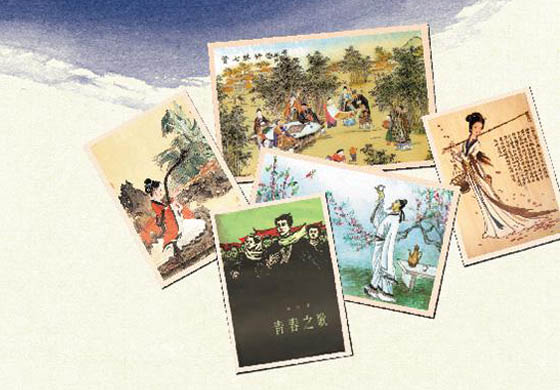 An interview with Dr. Hao Weimin, former lecturer at Sabaragamuwa University, on the origins, evolution, and global significance of Chinese literature.
China is like another world on our planet. Since ancient times, it has developed unique philosophical, technological, artistic, cultural, and literary traditions. These are great traditions, and within them lies the radiance of the Eastern sun — full of life.
Even today, memories of the Chinese children's books that reached our hands in childhood remain fresh. The courage, collectivism, perseverance, and discipline depicted in those books have quietly shaped our conscience ever since.
In order to recognize the features and qualities of that great Chinese literary tradition — which has flowed through the ages — I present this interview with Dr. Hao Weimin, a Chinese national university professor who was then serving in the Department of Modern Languages at Sabaragamuwa University. This is offered during Sri Lanka's literary month, in the hope of bringing some recognition to Chinese literature, which has not received the same attention in our country as Western literature.
If we briefly explain how the origin and development of Chinese literature is marked within the history of Chinese literature…
According to the firmest sources on the origin of Chinese literature, a tradition of compiling texts existed as far back as the 11th century BCE. But it was not written on paper as it is today. It was written on bronze, on tortoise shells, and on the bones of other animals. What was written in that early period were things such as sacrificial rites and royal decrees. There existed a tradition whereby an official of the royal court would collect folk songs and folk poems from various regions and hand them over to the court. At that time, education in China was confined to the male children of elite families. In the 6th century BCE, Confucius brought about a great social transformation by founding a private educational institution where everyone, without class distinction, could learn. From the poems that had been collected for the royal court, he selected 300 poems and compiled them into a textbook. This text, known as the ‘Classic of Poetry,’ we regard as China's first realist anthology of poetry.
The text known as the 'I Ching' should also be mentioned. Although this text, belonging to the 11th century BCE, was a work of divination, in the 6th century BCE Confucius incorporated philosophical ideas into it and expanded it considerably. Historical texts, philosophical texts and poetic texts of this kind had already become popular from that period onward. These are regarded as belonging to the Northern Chinese tradition, associated with the region of the Yellow River.
Likewise, in the state of Chu — regarded as the most powerful among the seven states of southern China, and which, in that era, faced social upheaval and political conflict as a challenge — the great poet Qu Yuan (340–274 BCE), who lived in that state, wrote poems for his kingdom. The poetry he wrote belongs to a poetic tradition of a mystical, fantastical style. This poet was the pioneer in giving birth to China's tradition of mystical poetry. Later Chinese poetic literature drew nourishment from both this 'poetry of the state of Chu' and the 'Classic of Poetry.' These two poetic traditions, arriving from northern and southern China respectively, represent mysticism and realism. These two texts are regarded as the symbolic starting points of Chinese verse literature.
The historical texts and philosophical texts written about that state at that time were also rich in literary form. In truth, they function as literary texts even as they are historical texts, and they are philosophical texts as well. China had, in the past, a tradition of compiling such mixed texts. In books of that kind one finds no shortage of parables, satirical tales and folk stories. It was from these that China's later famous parables and satirical tales emerged. Historians and philosophers, in writing their books, wrote by incorporating the parables and satirical tales that were current in the society of their time.
By the time of the Han dynasty, a delicate, refined poetic tradition began in China — a tradition somewhat similar to the Japanese haiku tradition. In the early centuries of the Common Era, China's folk-song style also began.
On the arrival of Buddhism and its influence on literature:
Buddhism came to China during the Han dynasty. By this time, the Chinese literary tradition had already developed considerably. Buddhism did not arrive in China primarily through the propagation of the Dharma. When those who first brought it arrived, because China already possessed a powerful philosophical tradition of its own as well as its own indigenous religious environment, there was no free space in which a foreign religion of this kind could propagate its teachings. For this reason, the Tripitaka literature was translated into the Chinese language. Through this translation of the Tripitaka, Chinese literature received a great enrichment. The origins of fantastical, mystical fiction arose through this. The Jataka tales became especially popular in China. Fiction developed through them. The influence of the mythological tales found in the great Indian tradition also came to Chinese literature. It was through the translation of the Tripitaka literature into Chinese that this enrichment was received.
Next, during the Qin dynasty, texts on the principles of Chinese literature appeared, and, with the influence of Buddhism, the poetic tradition was renewed.
On the Tang, Song, Yuan, Ming and Qing periods:
During the Tang and Song dynasties, spanning the 7th to the 12th centuries CE, the field of poetry reached a state of great development, and celebrated poets emerged. On the prose side too, fiction resembling the novel form was created in abundance. Under the influence of Buddhism, a distinct literary style arose within the temples. Fiction, poetry, and folk literary works all came into being.
In the Yuan dynasty period, beginning in the 13th century, what stood out was the writing of drama. For this reason, the Yuan period is an age of drama.
In the Ming dynasty period of the 15th century, long, multi-chaptered works of fiction were created. This period is a golden age of fiction literature. There are three famous works of fiction written in this period: 'Romance of the Three Kingdoms,' 'Water Margin,' and 'Journey to the West.' Short stories also flourished during the Ming period. Inheriting the mystical narrative styles of the Tang and Song periods, a series of short stories exposing social injustice was written.
In the Qing dynasty, China's final imperial dynasty, works of fiction became still more renowned. In this way, each imperial period of China has its own distinctive literary characteristics. Both the realist and the mystical literary traditions developed in China from ancient times and matured considerably in later periods. Even so, Chinese literature has leaned more strongly toward realism.
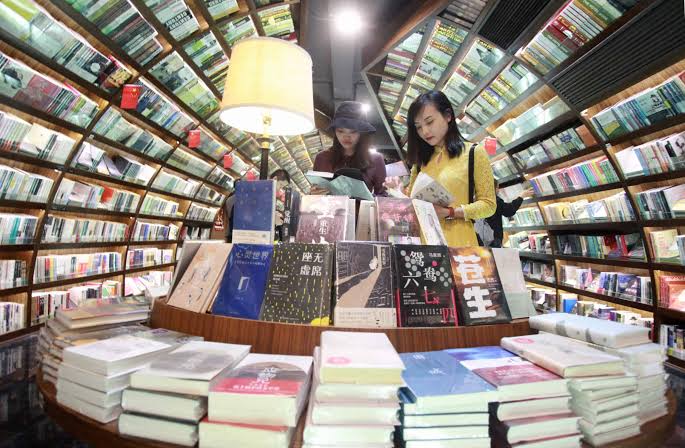
What are the milestones of China's modern literary period?
China's modern literature began in the year 1919. We regard the cultural transformation that took place in China on 4 May 1919 as the origin of modern Chinese literature. Until then, the old literary period had prevailed.
During the first two decades of the 20th century, alongside the awakening of Chinese scholarship, a new literature emerged that expressed the awakening of the people. Literary works were created that dealt, in particular, with the liberation of the oppressed people of society, of women, and with the problems of farmers. China is a country that faced invasions and war after war. In its early period, China had a feudal society with a monarchy. When the Japanese invader invaded China, a new literary tradition was needed to awaken the Chinese people against that invasion. For this purpose, novels, poems and the like were written by new writers in vernacular, spoken language. Writing in the vernacular became a defining feature of that era. Because of this, a progressive form of Chinese literature can be seen in the 1920s and 1930s. This literary style arose to awaken the entire Chinese nation. By around the 1940s, this progressive literary style had become a revolutionary literary tradition. This can be seen alongside the establishment of the Left-Wing Writers' League. A literary tradition inclined toward revolution can be seen in this period. Works created on the basis of the ideology of 'art for art's sake,' which did not reflect society, were rejected by the Chinese people during this time. The foremost writer of this period, who exposed the weaknesses of Chinese society, was Lu Xun. The Chinese revolution had a very strong impact on modern Chinese literature. We refer to the period from 1919 until 1949, the year of the Chinese revolution, as the first era of modern Chinese literature.
The second era of modern Chinese literature begins after the founding of the People's Republic of China. A socialist literary tradition celebrating the new socialist system can be seen in this period. Valuable, fine works were produced during the early era of modern Chinese literature. But in this second era, that diminished. The diversity of works declined. In terms of field and subject matter, it began to narrow.
The present era of modern Chinese literature dawned after 1979. After the Cultural Revolution ended and China began its new economic reforms, this new literary tradition began. We refer to the literature of this era, continuing to the present, as the literature of the new era. This era has come to be accepted among the Chinese people as an invigorating period of successful experimentation in Chinese literature. In this era, the Chinese nation, looking closely at its own traditions, has produced a literature that is open to the world and experiments with diversity in every way, so as to be suited to world literature.
Looking back at the modern literary era, what is most highly regarded are the early era and the late era. The early era refers to the literature of the second and third decades of the 20th century. Lu Xun, Guo Moruo, Mao Dun, Ba Jin, Lao She and Cao Yu — these six — were the foremost writers of that era. After that comes the era beginning in 1979 and continuing to the end of the last century. It is in these two eras that it is judged that most of the valuable works of modern Chinese literature were written. But it cannot be said that no good works were produced in between these two literary eras either. There were indeed good works.
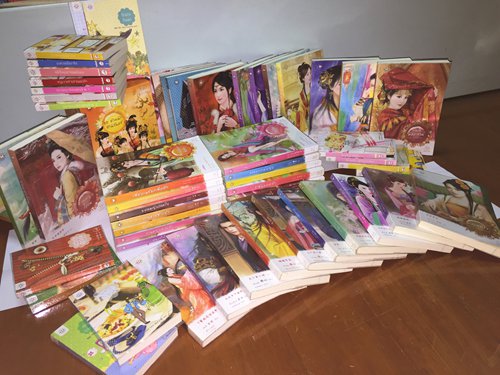
What influence has ancient Chinese literature had on modern Chinese literature?
China's ancient literary tradition is an extremely powerful, great tradition. It is by drawing nourishment from that tradition that modern literature is built up. Even where it is said that Western principles, critical methods, or Western works have exerted influence, these have always been blended together with China's own indigenous style. The writing style of present-day and modern Chinese writers is a style nourished by ancient Chinese literature. That is the value of Chinese literature. It has no mechanically imitative form. In some countries, writers write by imitating some particular country or famous tradition. In truth, it is difficult for us to accept such works as good works. But in China, it is a matter of taking the inheritance of the indigenous tradition as the base, drawing its essence, and incorporating that — it does not become something else. One's own indigenous style is nourished, not diminished. That is a characteristic of Chinese writers.
Just as various philosophical, religious and political currents can be seen across the different periods of ancient Chinese literature, what distinctive currents can be seen in modern Chinese literature in this same way?
At present, religious influence is greatly reduced. What is seen most within modern literature is free verse, short stories, novels, drama, and the like. But China also has a tradition of war literature, a tradition of historical narrative, and a tradition of children's literature. From ancient times onward, many works have been created about war and about history. Within modern literature too, there are writers who write about war and military life. There are writers who write about rural areas and about the farming community. There is another group of writers who create children's literature. There have been writers who wrote novels and historical dramas out of historical narratives. Such traditions still exist within Chinese literature today. Likewise, when speaking of translated literature, China has a more comprehensive body of translated literature than other countries. Because there is a shortage of people in China who know foreign languages, as soon as any good book — literary, philosophical, scientific, whatever it may be — is published, it is very quickly translated into the Chinese language. Because of this, China has an extremely large and comprehensive body of translated literature.
Are literary works created in China only in the Chinese language, or is there also literature in regional languages?
In the 3rd century BCE, the emperor who ruled all of China ordered that the scripts used throughout China be gathered together and that a single standard script be used. If books were not written in that script, those books were burned. It was enforced very strictly in this way. China is a country with many nationalities. There are 55 minority nationalities alone. Among them, 23 nationalities possess their own scripts. There is also literature written in those scripts. These too are regarded as part of Chinese literature itself. However much regional pronunciation may vary, the writing is done in the same way. For this reason, that great tradition influenced Japan, Korea and Vietnam as well. In the ancient period, if any text was written in those three countries, it was written in Chinese characters. Although China has 32 large provinces, and each of those provinces has its own literary traditions, the writing is done in the same way — in a manner that anyone can appreciate. There are traditions referred to as the Northern tradition and the Southern tradition. There are writers in each of those provinces. There is literature written that is indigenous to each of those regions. In addition, every province and every city has its own literary associations and literary magazines. There are literary styles particular to each of those regions.
What distinctive trends can be seen in the creative work of young writers presently engaged in literary creation in China during this era?
The characteristic feature of the modern era of Chinese literature is the creation, as far as possible, of literary works that will endure permanently and join world literature. However, such literary works existed in ancient China too. China's young writers are earnestly concerned with questions such as: how does one restore the Chinese national tradition, and how does the country with the world's largest population create literary works, in its own language, that are recognised across the entire world? For my part, I would say that this is an excellent thing. We ought to draw as much essence as we can from the literary traditions of other countries. At the same time, this ought to be done while standing upon China's own great indigenous tradition. Likewise, the subject matter that is created through such blending is a very new tradition suited to world literature. That new tradition is neither China's great tradition, nor the revolutionary socialist tradition, nor the Western tradition. It is a rich blending of all of these together. It is through that blending that works of world literature are born.
Have the magical-realist features seen within the discourse of Latin American literature also influenced modern Chinese literature?
It can be said that such magical-realist features have had an influence on the literature of the new era, particularly in the last decades of the last century and in these past few years. In any case, this is an era in which Chinese literary creation enjoys a freedom never seen before. Literary works concerning humankind, human society, and human thoughts and aspirations have been created in ways suited to each respective era. But the realist principle has always been a tradition that China has valued. That ought especially to be said.
What has been the response of Chinese literary society to literary creations of these new trends?
Debates arise. But we should not, as a matter of experimentation, condemn such works outright. When the author of a work that has been criticised takes pride in the fact that their work has been criticised for being that powerful — it is, after all, an experiment. Through it, that writer is able to produce a still better work. Because of this, even though such works may not receive wide acceptance, they hold a certain value as an experiment. For this reason, such works are not condemned to that great an extent.
What kind of support does the Chinese government extend to the field of literature?
The Chinese government is a government that shows great regard for literature. That is a tradition. Propaganda work was of great importance to the revolution. Just as China takes great satisfaction when it wins the most gold medals at the Olympic Games, the Chinese government regards it as an equally joyful matter when a Chinese national — whether in China or in some other country — creates, in the Chinese language, a work that enriches world literature. There are distinct traditions of Chinese literature in each of those respective countries. China pays close, attentive regard to works from Taiwan, Hong Kong, Malaysia, Indonesia, Macau and Singapore. It reviews them. It is not only from the People's Republic, but also good Chinese works born in other countries and regions that are brought into our literary history. Because of this, this is an invigorating era in which Chinese literature across the entire world is becoming united and joining world literature.
When compared with literary currents such as European, Russian and Latin American literature, the literary current of China, belonging to our own region, has reached our country in very small measure. How do you view this situation?
At present, many people prefer to introduce novels and short stories written in the modern period. Some critics say that because Chinese literature, in a certain era, leaned toward the political side, its value is diminished — that is one factor. The other is the language barrier. Many valuable works of Chinese literature have not yet been translated even into English. Even where they have been translated, they have been translated in a much altered form. There are Chinese literary works that have been translated into English. But when these are translated again into Sinhala, there exists a great gap from the original Chinese text. This shortfall exists especially in poetry translation. At times, a mistaken impression is created. It is that distorted. In truth, Chinese literature has not reached Sri Lankan readers to the extent that the literature of other countries has. We are making an effort to begin translating directly from the original Chinese text into Sinhala. The works translated so far are, in truth, not in a state that can be considered satisfactory either in quantity or in quality. I think that if works representing each respective era were selected in sequence, with an understanding of both China's ancient literary history and its modern literary history, and those works were translated, a very different situation would come about.
Finally, what is your view regarding the role of Chinese literature within the literary discourse of the Asian region?
Because such a great ancient tradition existed, the worth of Chinese literature has had a considerable influence on the surrounding countries as well. Likewise, as a result of the exchange that has existed between the two great traditions, Indian literature has influenced Chinese literature. The worth of the great tradition of Chinese literature is a treasury belonging to world literature. The great tradition of Chinese literature holds a considerable place within the literature of the Asian region. It is not confined to any one country or nation. It is a gift belonging to the entire world — a treasury especially for the countries of the East. But this ancient Chinese literature has not yet been translated into their respective languages. Once ancient Chinese literature is translated, people will come to know that successful literary experiments not inferior to Western literature were carried out in China as far back as ancient times.
Prabhath Chinthaka Meegodage
සම්බන්ධිත පුවත් | Related News




ප්රධාන පුවත්
යුරෝපයේ හමුදාමය සූදානම හමුවේ රුසියාවෙන් අනතුරු ඇඟවීමක්.. ඇමෙරිකාව සහ යුක්රේනය සම්බන්ධයෙන් ස්ථාවරයත් හෙළි කරයි.. - එක්සත් ජාතීන්ගේ මහා මණ්ඩලයේදී රුසියානු විදේශ අමාත්යවරයාගෙන් ප්රබල ප්රකාශයක්
කතානායකට එරෙහිව විශ්වාසභංගයක්.. චෝදනා 46ක්..
ක්රිෂ් ගනුදෙනුවට අදාළව අල්ලස් කොමිසම නාමල්ගෙන් ප්රකාශයක් ලබා ගනී..
"කොපමණ සම්බාධක දැමුවත් රටේ ස්වෛරීභාවය පාවා දෙන්නේ නෑ" – කියුබානු නියෝජ්ය විදේශ අමාත්ය කාලෝස් ෆර්නැන්ඩස් ගෙන් අමෙරිකාවට එරෙහිව දැඩි ප්රකාශයක්
යුරෝපය සමඟ යුද්ධයක් රුසියාවට අවශ්ය නැහැ – පුටින්
බිනර පුර පසළොස්වක පොහොය අදයි..
තිලීපන්ගේ උපවාසය සහ සැමරුම් පිළිබඳ නැවතත් කතාබහක්: ඉතිහාසයේ සැබෑ තත්ත්වය සහ දේශපාලන භාවිතය පිළිබඳ ශමීන්ද්ර ෆෙර්ඩිනැන්ඩෝගෙන් අනාවරණයක්..
ආණ්ඩුවත් විපක්ෂයත් දෙකම යන්නේ එකම පාරේ.. ආණ්ඩුව තමන්ගේ දේශපාලන බලය තහවුරු කරගන්න ව්යවස්ථා සංශෝධන ගේනවා.. ඒකත් පැරණි ක්රමයම තමයි.. - උවිඳු විජේවීර
"සියලු අභියෝග මැද චීන-ශ්රී ලංකා සබඳතා තවත් ශක්තිමත් කරනවා" – චීන තානාපති වේ හුආශියැං
රුසියානුවන් පුටින් පාලනයට යළි රට භාරදුන්නේ ඇයි?.. - ආචාර්ය ජගත් චන්ද්රවංශගෙන් සුවිශේෂී අනාවරණයක්..
ක්රිෂ් නඩුව ගැන නාමල්ගෙන් බන්ධනාගාරය තුළදී ප්රකාශ ගන්න අල්ලස් කොමිසමට අධිකරණයෙන් අවසර දෙයි..
''අමෙරිකාවට දණ නමන්නේ නෑ''- ජගත් මහා මණ්ඩලයේ දී ඉරාන ජනපතිගෙන් ප්රබල ප්රකාශයක්..
අමෙරිකා නිල සංචාරය අරඹමින් චීන ජනපති වොෂින්ටනයට..
අභියෝග හමුවේ නොසැලුණු චීන-ශ්රී ලංකා මිත්රත්වයට නව ජවයක්.. - 77 වන ජාතික දිනයේදී චීන තානාපතිගෙන් විශේෂ ප්රකාශයක්
22 වැනි සංශෝධනය සම්මත කිරීමෙන් පසු ජනාධිපතිගේ පොරොන්දුවලට සහ ආණ්ඩුවට අත් වන ඉරණම ගැන අනාවරණයක්..
22 ගැන විවාදය අද..