
Yemen at a New Crossroads: The Houthis, Anti-Imperialist Resistance and the Challenge to American Hegemony The Houthi advance, the struggle for Bab al-Mandab and the changing balance of power in the Middle East

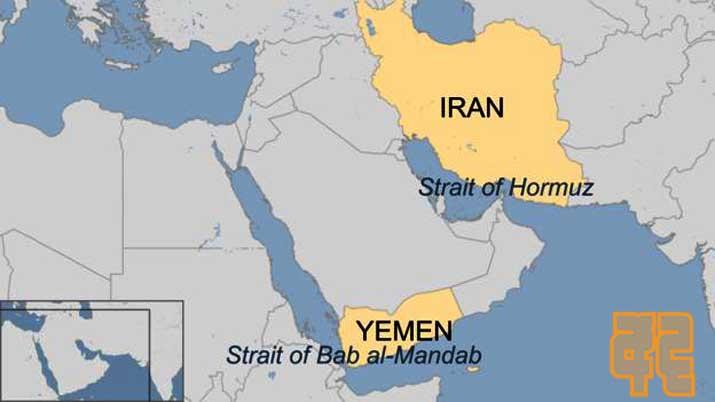 Yemen has once again become one of the most important
geopolitical battlegrounds in the Middle East.
Yemen has once again become one of the most important
geopolitical battlegrounds in the Middle East.
The rapid advance of the Houthi movement, Ansar Allah, along
Yemen's Red Sea coast—including the capture of the strategic port city of Al-Makha
(Mocha) and an island near the Bab al-Mandab Strait—has dramatically
altered the regional balance of power.
The development is taking place against the background of a
much wider confrontation involving the United States, Iran, Israel, Saudi
Arabia and other regional actors. It also threatens to turn Yemen's already
devastating humanitarian crisis into an even deeper catastrophe.
But the events in Yemen cannot be adequately understood by
describing the Houthis simply as an "Iranian-backed rebel group"
threatening international shipping.
Such a description leaves out the historical origins of the
Houthi movement, the Saudi-led intervention that began in 2015, Western
military support for that intervention, the Palestinian question, the Houthis'
own ideological development and the deep social and economic crisis that has
devastated Yemen.
From an anti-imperialist perspective, the present
confrontation can instead be viewed as part of a broader struggle over Yemeni
sovereignty, regional independence, control of strategic maritime routes and
the continued dominance of the US-led security order in the Middle East.
At the same time, an honest analysis cannot ignore the
serious economic, political and humanitarian consequences of Houthi rule
itself.
The reality is therefore more complicated than either the
Western description of the Houthis as nothing more than Iranian proxies or an
uncritical portrayal of them as a purely liberationist movement.
A New Turning Point in Yemen
The latest escalation represents the most serious fighting
since the UN-brokered truce of 2022.
Houthi forces have advanced rapidly along Yemen's western
coastline, capturing Mocha, pushing towards the Bab al-Mandab area and
taking control of Perim/Mayun Island, according to recent reports.
Reuters described the Houthi advance as a major shift in the regional balance
of power because it brings the movement substantially closer to the strategic
maritime chokepoint.
Associated Press reported on 14 September that more than
82,000 people had been displaced since early September as fighting
intensified along the Red Sea coast.
Government sources claimed that more than 500 government
troops had been killed and more than 1,000 Houthi fighters killed in
the recent fighting. These casualty figures are claims by parties to the
conflict and have not been independently verified.
The United Nations and humanitarian organisations have
warned of the danger of a return to full-scale war.
For Yemen's population, this is not an abstract geopolitical
contest. Millions of people already live with hunger, displacement, destroyed
infrastructure and a collapsed economy.
Who Are the Houthis?
The Houthi movement did not originate in Tehran.
Ansar Allah emerged from Yemen's own political and religious
environment, particularly the Zaydi revivalist movement in northern Yemen. Its
roots go back to the Saada conflicts of 2004–2010, years before the
present regional confrontation.
The movement's ideology combines several elements:
- Yemeni
nationalism;
- Zaydi
religious identity;
- opposition
to US influence;
- opposition
to Israel;
- hostility
towards Saudi intervention;
- anti-imperialist
rhetoric; and
- support
for the Palestinian cause.
Iran subsequently became an important source of political,
financial and military assistance.
But the existence of Iranian support does not automatically
mean that the Houthis are simply an Iranian creation.
MERIP's analysis of Ansar Allah stresses the importance of
recognizing the movement's own political agency rather than reducing it
entirely to the status of an Iranian proxy.
This distinction is essential to understanding Yemen.
A movement can simultaneously have an alliance with a major
regional power and pursue its own national and ideological objectives.
The Anti-Imperialist Dimension
The Houthis' political discourse has always contained a
strong anti-American and anti-Israeli component.
Their slogan and political rhetoric identify the United
States and Israel as central sources of what they describe as foreign
domination.
This ideology intensified dramatically after the outbreak of
the Gaza war.
When the Houthis began attacking vessels associated with
Israel and launching missiles and drones towards Israel, they presented their
actions as support for the Palestinian people.
From the Houthi perspective, Yemen's geographical position
gives it a unique ability to impose political and economic costs on Israel and
its supporters.
The Red Sea consequently became a new front in the
Palestinian struggle.
This is particularly significant because most Arab
governments have not directly entered the war against Israel.
The Houthis have therefore attempted to fill a political
space created by the gap between widespread Arab and Global South public
support for Palestine and the limited direct military response of Arab
governments.
Whether one accepts the Houthis' political claims or not,
their intervention has changed the regional political equation.
The Forgotten Saudi War
Any serious discussion of Houthi military activity must also
examine the origins of the wider war.
In March 2015, Saudi Arabia launched a military
intervention in Yemen at the head of a coalition seeking to restore the
internationally recognized government after the Houthis seized Sana'a.
The intervention received military and logistical support
from the United States and other Western states.
Yemen was already the poorest country in the Arabian
Peninsula.
The result was a devastating conflict in which one of the
world's wealthiest oil-producing states intervened militarily in one of the
world's poorest countries.
Air strikes, blockade conditions, economic fragmentation and
destruction of infrastructure contributed to what became one of the world's
worst humanitarian crises.
This history is essential to understanding why the Houthis
developed such a strong anti-Saudi and anti-American political narrative.
Yemen's Strategic Geography
Yemen's importance is largely determined by geography.
It sits at the intersection of:
- the
Red Sea;
- the
Gulf of Aden;
- the
Arabian Peninsula;
- East
Africa;
- the
Indian Ocean;
- the
Suez Canal trade route; and
- the
maritime energy routes connecting the Middle East with Asia and Europe.
At the entrance to the Red Sea lies the Bab al-Mandab
Strait, one of the world's most important maritime chokepoints.
The Houthi advance therefore has significance far beyond the
territory immediately captured.
Control or effective military influence over the western
coastline provides the movement with leverage over one of the world's principal
commercial arteries.
Reuters has described the current Houthi position as a major
strategic development because it gives the movement greater ability to threaten
shipping and puts additional pressure on Gulf states.
From Resistance to Maritime Power
The Houthis have gradually transformed their geographical
position into a form of strategic leverage.
Since 2023, the movement has attacked or threatened
commercial shipping in the Red Sea, initially presenting the campaign as an
effort to pressure Israel over Gaza.
The latest territorial advances consolidate rather than
create that maritime capability.
Al Jazeera's analysis notes that the Houthis had already
been capable of disrupting shipping for years; the new territorial gains
strengthen their ability to exercise that power and expose the weakness of the
internationally recognized Yemeni government.
In August 2026, a Houthi coordination Centre in Hudaydah
issued new instructions concerning navigation in the Red Sea, saying that its
safe-passage service was voluntary and free of charge while asking shipping
companies not to share vessel information with unauthorised actors.
The Sana'a Center interpreted these developments as evidence
that the Houthis are attempting to establish themselves as a new authority
governing maritime security in the Red Sea.
This is a profound development.
The issue is no longer simply whether the Houthis can attack
ships.
It is whether a non-state movement can establish itself as
an alternative security authority over a strategically vital international
waterway.
The Challenge to American Hegemony
This is where the Yemen crisis takes on global significance.
For decades, the United States has presented itself as the
principal guarantor of freedom of navigation and security in the Middle East.
American naval power, military bases, intelligence networks
and alliances with Saudi Arabia, Israel and other regional governments have
formed a central pillar of this system.
The Houthi challenge exposes the limitations of that
architecture.
A movement operating from one of the world's poorest
countries has been able to threaten commercial shipping, increase insurance and
transportation costs and force the United States and its allies to devote
substantial military resources to protecting maritime routes.
The question is not whether the Houthis possess greater
military power than the United States.
They obviously do not.
The more important question is whether overwhelming military
superiority can guarantee political control.
Yemen suggests that it cannot.
Military Supremacy Is Not Political Supremacy
The United States possesses enormous military advantages:
aircraft carriers, advanced aircraft, precision weapons, satellites,
intelligence systems and an extensive network of military bases and alliances.
Yet military superiority does not automatically eliminate
the political conditions that produce resistance.
This is one of the central lessons of the post-Cold War
Middle East.
American military intervention in Iraq, Afghanistan, Libya
and elsewhere demonstrated extraordinary destructive capacity, but military
intervention repeatedly failed to produce stable political settlements that
corresponded to Washington's original objectives.
Yemen presents another version of the same problem.
The United States can strike military infrastructure.
It cannot easily destroy the political grievances,
nationalist sentiments and ideological motivations that sustain Ansar Allah.
This creates an important distinction between military
power and hegemony.
Hegemony requires not merely the ability to destroy an enemy
but the ability to establish rules, maintain alliances, shape political
outcomes and persuade other states that the existing order is legitimate and
sustainable.
The Yemen crisis increasingly calls that assumption into
question.
The Economic Cost of Hegemony
Maintaining a global security architecture also has an
economic cost.
The United States and its allies have to devote military
resources to protecting the maritime routes on which global capitalism depends.
The more vulnerable those routes become, the more expensive
the security system becomes.
The Red Sea is particularly important because it links Asian
manufacturing centres with European markets through the Suez Canal.
If vessels are forced to avoid the Red Sea and travel around
the Cape of Good Hope, voyages become substantially longer, increasing fuel,
insurance and freight costs.
The consequences eventually reach consumers through higher
prices.
The crisis has now moved into the energy sector.
The Saudi East-West oil pipeline, stretching
approximately 1,200 kilometres to the Red Sea port of Yanbu, has a
capacity of approximately 4 million barrels per day, equivalent to
around 4 percent of global oil supply.
Satellite imagery reviewed by The Guardian showed extensive
damage following a reported drone attack. Brent crude subsequently rose above $108
per barrel.
Thus the geopolitical struggle in Yemen has a direct
connection with the global economy.
War in Yemen → disruption of shipping → higher insurance
costs → higher transport costs → energy-price increases → inflation.
This is how a conflict in one of the world's poorest
countries can affect households thousands of kilometres away.
Bab al-Mandab and the Global South
The consequences are particularly important for developing
countries.
Asian economies depend heavily on maritime trade through the
Red Sea.
African countries around the Red Sea are directly exposed to
instability.
European economies depend on the uninterrupted movement of
energy and manufactured goods.
China, India, Japan and South Korea have major economic
interests in the stability of the route.
The Yemen crisis therefore raises a wider question for the
Global South:
Should the world's strategic maritime routes remain
primarily protected and controlled through a US-led military system, or should
a more plural and multipolar security architecture emerge?
This question goes beyond the Houthis.
It concerns the future structure of international power.
The Saudi Dilemma
The Houthi advance has placed Saudi Arabia in a particularly
difficult position.
Riyadh has spent years attempting to contain or defeat the
Houthis.
Yet the military intervention did not produce the decisive
victory originally sought.
The anti-Houthi camp itself remains divided among government
forces, tribal actors, southern separatists and other political and military
factions.
The present Houthi advance demonstrates the consequences of
that fragmentation.
Reuters reports that Gulf states are increasingly confronted
with the choice between military escalation and diplomacy, while the Houthi
advance is strengthening Iran's regional position.
For Saudi Arabia, the economic implications are enormous.
The kingdom's ambitious Vision 2030 programme depends
on investment, tourism, infrastructure development and relative regional
stability.
A prolonged war threatening its oil infrastructure and Red
Sea ports would undermine those objectives.
This creates an important contradiction in the US-Saudi
relationship.
Washington may favour military deterrence.
Riyadh increasingly has to consider whether permanent
confrontation serves its own economic transformation.
The Changing Regional Order
Saudi Arabia's strategic calculations are also changing
because the regional balance is changing.
The Saudi-Iran rapprochement brokered by China in 2023
demonstrated that Beijing can play a diplomatic role in a region historically
dominated by Washington.
China's expanding economic relationships with Gulf states
have further diversified their external partnerships.
Regional governments increasingly have the option of
maintaining relationships simultaneously with:
- the
United States;
- China;
- Russia;
- Iran;
- India;
and
- other
emerging powers.
This reduces Washington's ability to dictate regional policy
unilaterally.
The Houthi crisis is therefore taking place during a broader
transition from a relatively unchallenged US-led regional order towards a more
contested and multipolar Middle East.
Iran: Ally, Sponsor and Strategic Partner
Iran's role cannot be ignored.
Iran has provided the Houthis with significant political,
military and financial support.
The relationship has become particularly important within
the wider network known as the Axis of Resistance.
The Houthis' position along the Red Sea complements Iran's
ability to influence the strategic environment around the Strait of Hormuz.
This creates a geographical pincer around two of the world's
most important maritime chokepoints.
But it would also be simplistic to assume that the Houthis
merely execute Iranian orders.
The movement has its own domestic political interests, its
own military command structure and its own ideological identity.
Iran and the Houthis share strategic interests, but they are
not identical actors.
This distinction is important in any serious analysis of the
conflict.
The Palestinian Dimension
The Palestinian issue has become central to Houthi
international politics.
The movement has used the Gaza war to frame its Red Sea
operations as part of a broader struggle against Israel and Western support for
Israel.
This has provided the Houthis with a political narrative
extending far beyond Yemen.
For many people in the Arab world and Global South, the
issue is not whether they support every Houthi policy.
It is whether the Palestinian people should be allowed to
remain under occupation, blockade and military assault without meaningful
international resistance.
The Houthis have exploited this political contradiction more
effectively than many established Arab governments.
This helps explain why their political influence has
expanded beyond Yemen despite the severe controversies surrounding their
domestic rule.
Yemen's Economic Catastrophe
However, the international strategic importance of the
Houthis should not obscure Yemen's economic reality.
Yemen remains one of the world's poorest and most
humanitarianly vulnerable countries.
The country's economy has been fragmented between competing
authorities, currencies, financial institutions and taxation systems.
Oil production and exports have been severely disrupted.
Infrastructure has been destroyed.
Public-sector salaries have been interrupted.
Inflation and currency depreciation have reduced household
purchasing power.
The humanitarian system itself is struggling to survive.
The Sana'a Center has reported that the 2026 Yemen
Humanitarian Response Plan requested approximately US$2.16 billion to
assist around 12 million people, while funding remained severely
inadequate.
The previous year's humanitarian plan received only around US$687.9
million, approximately 28 percent of the US$2.48 billion
requested.
These figures demonstrate the extraordinary gap between
Yemen's needs and the resources available to address them.
The Houthi War Economy
An anti-imperialist analysis must also critically examine
Houthi economic policies.
Resistance to foreign intervention does not automatically
make every domestic policy legitimate.
The Houthi authorities have developed an extensive wartime
economic system involving taxation, levies, customs, contributions and other
forms of revenue collection.
The Sana'a Center has warned that the increasing burden of
these measures falls heavily on an already impoverished population.
The movement has also faced criticism over political
repression, restrictions on civil society and the concentration of power.
These realities cannot simply be dismissed because the
Houthis oppose the United States and Israel.
The Yemeni people have a right to oppose foreign domination and
a right to accountable government, economic justice and political freedom.
A genuine anti-imperialist position must therefore defend
Yemeni sovereignty without romanticising internal authoritarianism.
The Social Cost
The ultimate victims of the conflict remain ordinary
Yemenis.
The latest offensive has already displaced tens of thousands
of people, with AP reporting more than 82,000 displaced since early
September.
The displaced face shortages of food, water, shelter and
medical assistance.
The escalation also threatens to destroy whatever economic
and social infrastructure survived more than a decade of war.
For Yemen's population, the question is not which
geopolitical bloc wins.
It is whether they can live in peace.
The Contradiction of Yemen's Strategic Importance
Yemen presents one of the most striking contradictions in
international politics.
It is one of the world's poorest countries.
Yet its geographical position gives it enormous strategic
importance.
Its coastline controls access to one of the world's major
maritime corridors.
Its ports influence global trade.
Its proximity to Saudi Arabia gives it importance for the
world's leading oil-producing region.
Its position opposite the Horn of Africa connects it to
Africa, the Middle East and the Indian Ocean.
For decades, external powers have therefore treated Yemen
primarily as a strategic asset.
The central anti-imperialist question is whether Yemen can
become a sovereign state whose geography benefits its people rather than
foreign powers.
A Challenge to the US-Led Security Order
The significance of the Houthi advance therefore goes beyond
the question of territory.
The movement has demonstrated that a non-state actor can
challenge the assumptions underlying the US-led security system.
The United States can protect individual ships.
It can launch military operations.
It can deploy aircraft carriers and advanced weapons.
But it cannot easily guarantee that strategic waterways will
remain politically uncontested.
This creates a growing contradiction.
The more Washington is required to use military power to
maintain the existing order, the more visible the vulnerabilities of that order
become.
And the more regional states recognise those
vulnerabilities, the more incentive they have to diversify their strategic
relationships.
That is how hegemony can weaken—not necessarily through
military defeat, but through the gradual erosion of political authority,
economic leverage and strategic exclusivity.
From American Primacy to a Multipolar Middle East
It would be premature to declare that American hegemony has
collapsed.
The United States remains by far the world's most powerful
military state and maintains an extraordinary network of alliances, bases,
financial institutions and technological capabilities.
But American primacy is increasingly being contested.
China has become a major economic and diplomatic actor.
Russia remains influential in the wider Middle East.
Iran has demonstrated its ability to survive sustained US
pressure.
Saudi Arabia is seeking greater strategic autonomy.
Other regional states are increasingly pursuing
multi-alignment rather than exclusive dependence on Washington.
The Houthi movement is one component of this broader
transformation.
Its importance lies not in its ability to defeat the United
States militarily.
Its importance lies in demonstrating that American
military superiority no longer guarantees uncontested political control over
the region.
Three Possible Futures
The current crisis could develop in several directions.
First: A return to full-scale civil war
The Houthi advance could trigger a prolonged Saudi-backed
counteroffensive and destroy the fragile stability established since the 2022
truce.
This would deepen Yemen's humanitarian catastrophe.
Second: A new political settlement
The Houthi military gains could ultimately become bargaining
leverage for negotiations involving Saudi Arabia, the internationally recognized
government and the Houthis.
Such a settlement would require recognition that the Houthis
cannot simply be eliminated militarily.
Third: A wider regional war
The most dangerous possibility is that Yemen becomes
permanently integrated into the wider confrontation between Iran, Israel and
the United States.
If the Bab al-Mandab and Strait of Hormuz are simultaneously
disrupted, the consequences for global energy markets could be extraordinary.
Al Jazeera has estimated that simultaneous closure of the
two routes could affect approximately 25 percent of global oil and gas
supplies, while ships could face an additional 10–14 days of travel
around the Cape of Good Hope.
Such a scenario would transform the Yemen conflict into a
global economic crisis.
Conclusion: Yemen and the Erosion of Uncontested American
Power
The events unfolding in Yemen in September 2026 should
therefore not be viewed merely as another episode in a long-running civil war
or as a narrow dispute over shipping security.
At their core is a struggle over sovereignty, imperial
influence, Palestine, regional power, maritime control and economic resources.
The Houthis have transformed Yemen's geographical
vulnerability into strategic leverage.
They have challenged a regional order backed for decades by
Saudi Arabia, the United States and other Western powers.
They have demonstrated that a relatively small non-state
movement can impose economic and strategic costs on much more powerful states.
But the success of a resistance movement cannot ultimately
be measured only by the territory it captures or the ships it can threaten.
The ultimate measure must be whether the Yemeni people gain peace,
sovereignty, economic security, political dignity and control over their own
national resources.
The Houthis may not be capable of defeating American
military power—and there is no evidence that they can.
But they do demonstrate something potentially more important
for the future of international politics:
military supremacy does not necessarily produce political
supremacy.
Yemen has become one of the places where the limits of the
old US-dominated Middle Eastern order are becoming visible.
The United States still possesses enormous power. Yet Saudi
Arabia is seeking greater strategic autonomy, China is expanding its diplomatic
and economic influence, Iran remains a significant regional actor, and
movements such as Ansar Allah have demonstrated the ability to challenge the
established security architecture.
The significance of Yemen therefore lies not in the
prediction that American hegemony has suddenly collapsed.
It lies in the evidence that American power can no longer
operate in the Middle East without facing increasingly serious political,
military and economic constraints.
The struggle around Bab al-Mandab is consequently part of a
much larger historical transition—from an era of relatively uncontested
American primacy towards an increasingly contested and multipolar international
order.
And in that transformation, Yemen—despite being one of the poorest countries in the world—has emerged as one of the places where the future of the global balance of power is being fought out.
සම්බන්ධිත පුවත් | Related News






ප්රධාන පුවත්
කථානායකට එරෙහිව බරපතළ දූෂණ චෝදනා.. - අල්ලස් කොමිසමෙන් විමර්ශන ආරම්භ වෙයි..
දුම්රිය වෘත්තීය සමිති 26ක් අද මැදියම් රැයේ සිට වර්ජනයේ..
අතුරුදහන් වූ ඥානසාර හිමි යළි මතුවේ.. ගෝඨාභය, සෞදි සහ නෝර්වේ ඩීල් ගැන හෙළිදරව්වක්..
මරාගෙන මැරෙන පුතුන් හැදූ ඊබ්රහීම්ලා සහ පාස්කු ප්රහාරය ගැන පූර්ව දැනුවත්භාවයෙන් සිටි රවිලා ශානිලා එළියේ.. බුද්ධි අංශ නිලධාරීන් ඇතුළේ.. - විමල් වීරවංශ
ආණ්ඩුවේ බලු බද්දට පසු තන බද්දකුත් එයි ද?
අගවිනිසුරුවරයාට ලැබුණු වාහන බලපත්රවලට මොකද වුනේ?.. - ධර්මශ්රී කාරියවසම්ගෙන් හෙළිදරව්වක්
"ව්යවස්ථාපිත ඒකාධිපතිත්වයක් කරා යන අනුර කුමාරගේ පාලනයට එරෙහිව ජාතික බලවේග එකමුතු විය යුතුයි".. – අනුරාධපුරයේදී විමල් වීරවංශගෙන් ප්රබල ප්රකාශයක්
යේමනයේ හූති බලය තවදුරටත් වර්ධනය වෙයි.. කලාපීය බල තුලනයේ ප්රබල වෙනසක් වන ලකුණු!..
ජාතික න්යාය පත්රයක් දිනවන සටනට සියලු දෙනා එක්විය යුතුයි.. - විමල් වීරවංශ
ඇමරිකාවටත් අභියෝගයක් වූ හුතී බලයේ රහස ගැන ආචාර්ය ජගත් චන්ද්රවංශගෙන් අනාවරණයක්..
ව්යවස්ථා සංශෝධනවලින් පමණක් රටක ගැටලු විසඳිය හැකිද?..
ගෝඨාගේ කාලයේ තෙල් අර්බුදය කෘතිමව නිර්මාණය කළ හැටි මෙන්න.. - සංඛ චන්දිම අබේවර්ධනගෙන් හෙළිදරව්වක්..
රට අනතුරේ හෙලමින් NATO සරණ පතන්නේ නොදන්නාකමට ද?, මෝඩකමට ද?.. - වෛද්ය ජී. වීරසිංහ ගෙන් අනාවරණයක්
වෙනිසියුලාවේ ඩෙල්සි රොඩ්රිගස්ටත් වඩා අනුර භයානකයි.. - විමල් වීරවංශ
"රටක බාහිර සතුරන්ට වඩා ඇතුළත සිටින සතුරන් සහ පාවාදෙන්නන් අතිශය භයානකයි" - මහින්ද කියයි
කථානායකට එරෙහිව දයාසිරිගෙන් ජාත්යන්තරයට පැමිණිලි..