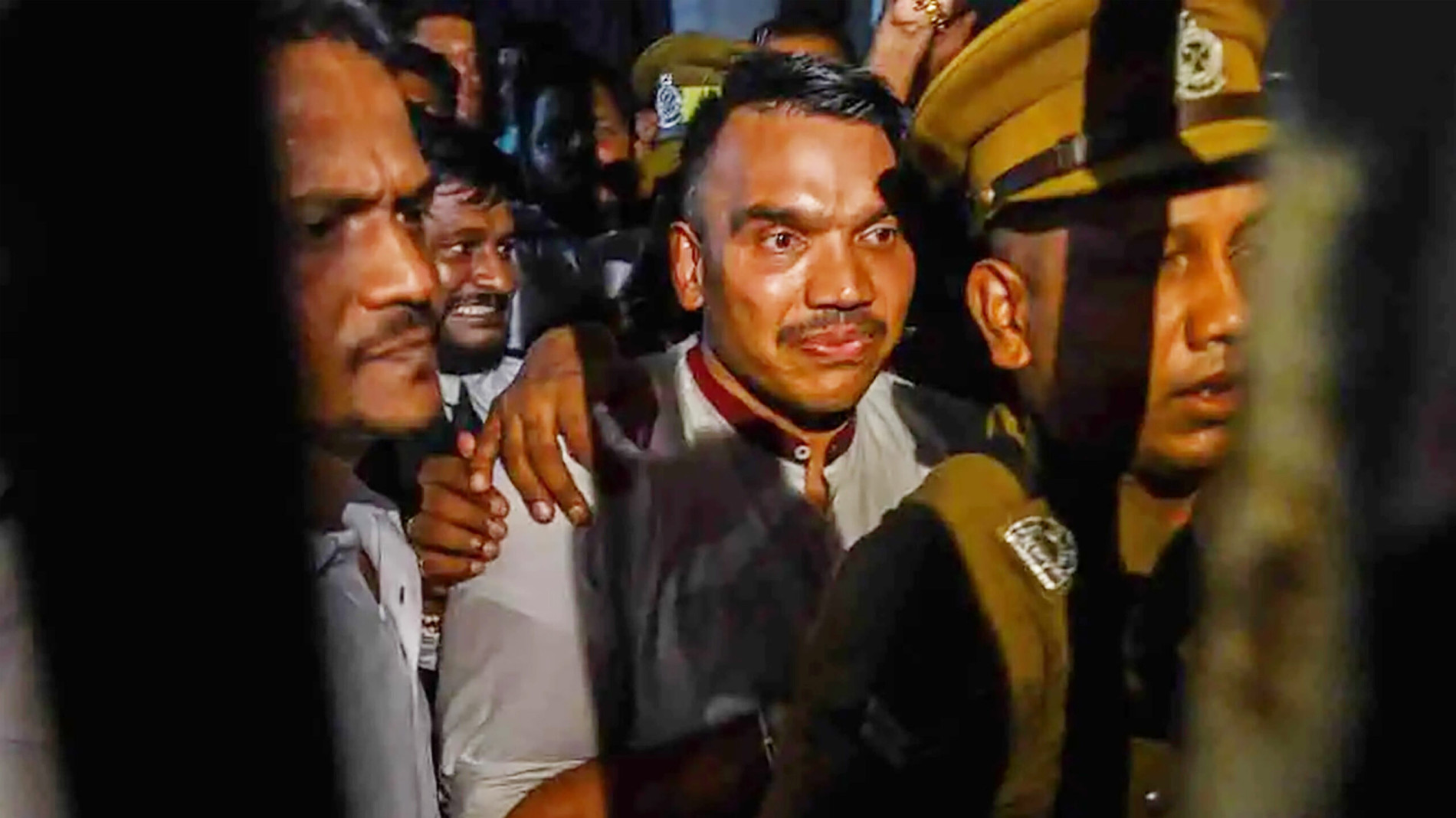
The political background and implications behind the arrest of Namal Rajapaksa in Sri Lanka

 Sri Lanka is a country that has attracted the attention
of foreign powers throughout history due to its geographical location on the
world map. Due to Sri Lanka's location in the Indian Ocean, its proximity to
major sea routes, and its regional geopolitical significance, the interest of
various powers in Sri Lanka has continued unabated.
Sri Lanka is a country that has attracted the attention
of foreign powers throughout history due to its geographical location on the
world map. Due to Sri Lanka's location in the Indian Ocean, its proximity to
major sea routes, and its regional geopolitical significance, the interest of
various powers in Sri Lanka has continued unabated.
Examining Sri Lanka's colonial history, it is clear that
through Portuguese, Dutch, and British rule, the country's political, economic,
and social structures were greatly influenced. Even after British rule ended,
the debate over external influences on Sri Lankan politics has not ceased.
Furthermore, the most severe crisis faced by Sri Lanka
after independence was the thirty-year war waged by separatist terrorists. The
end of the armed phase of the separatist forces in 2009 was a decisive event in
Sri Lankan history.
However, even after the end of the separatist war, issues
regarding national security, national unity, political activities of
separatism, and foreign interventions have not ended within Sri Lankan
politics.
The Question Regarding Namal's Arrest
Now we can turn to our main question.
What is the political background behind the arrest of Mr.
Namal Rajapaksa
at this time?
In seeking an answer to this question, one must consider not
only the arrest of an individual, but also the current political balance of
power, the political influence of the Rajapaksa family, the organizational
capacity of the opposition, and the mathematics relevant to upcoming elections.
The Important Signal of the 2024 Presidential Election
In the 2024 Presidential Election, the contest among Mr.
Anura Kumara Dissanayake, Mr. Sajith Premadasa, and Mr. Ranil Wickremesinghe
provided several important signals regarding Sri Lanka's political forces.
In particular, examining the results of the seven districts
of Jaffna, Vanni, Batticaloa, Digamadulla, Trincomalee, Nuwara Eliya, and
Badulla can identify changes in voter behavior that can be manipulated by
Western and Indian powers.
Table 1 -- 2024 Presidential Election: 7 Districts
Directly Subject to External Powers
District Anura Kumara % Sajith
Premadasa %
Dissanayake
Jaffna 54,172 7.29% 242,354 32.60%
Vanni 42,824 9.86% 190,844 43.92%
Batticaloa 38,832 12.19% 139,110 43.66%
Digamadulla 108,971 25.74% 200,384 47.33%
Trincomalee 99,772 20.83% 241,176 50.36%
Nuwara Eliya 210,114 22.17% 403,628 42.58%
Badulla 197,283 34.68% 219,674 38.61%
.
Candidate Total Votes Percentage
within
the total of both
Anura Kumara Dissanayake 751,968 31.47%
Sajith Premadasa 1,637,170 68.53%
Total 2,389,138
In these seven districts, Mr. Anura Kumara Dissanayake
secured 751,968 votes, while Mr. Sajith Premadasa secured 1,637,170 votes.
Accordingly, when considering these seven districts directly subject to
external powers, Mr. Sajith Premadasa was ahead of Mr. Anura Kumara Dissanayake
by 885,202 votes.
What Happened in 2010?
To understand the political behavior of voters in these
seven districts directly subject to external powers, it is also important to
compare with the results of the 2010 Presidential Election.
In those seven districts, the vote results obtained by Mr.
Mahinda Rajapaksa and Mr. Sarath Fonseka were as follows.
District Mahinda Rajapaksa % Sarath
Fonseka %
Jaffna 44,154 24.75% 113,877 63.84%
Vanni 28,740 27.31% 70,367 66.86%
Batticaloa 55,663 26.27% 146,057 68.93%
Digamadulla 146,912 47.92% 153,105 49.94%
Trincomalee 69,752 43.04% 87,661 54.09%
Nuwara Eliya 151,604 43.77% 180,604 52.14%
Badulla 237,579 53.23% 198,835 44.55%
In these seven districts, Mr. Mahinda Rajapaksa received
734,404 votes, and Mr. Sarath Fonseka received 950,506 votes. That is, Mr.
Fonseka was ahead by 216,102 votes.
The Changed Balance of Power in 2015
In the 2015 Presidential Election, within these seven
districts, Mr. Mahinda Rajapaksa received 630,561 votes, while Mr. Maithripala
Sirisena received 1,399,213 votes.
Accordingly, Mr. Maithripala Sirisena was ahead of Mr.
Mahinda Rajapaksa by 768,652 votes.
Comparing these three sets of figures reveals one important
fact: namely, in Sri Lanka's presidential elections, the voting behavior in
these districts, including the Northern and Eastern areas, has a significant
impact on the national balance of power.
The Combined Sajith--Ranil Vote in 2024
In the 2024 Presidential Election, according to first
preference votes, Mr. Anura Kumara Dissanayake obtained 5,634,915 votes, Mr.
Sajith Premadasa obtained 4,363,035 votes, and Mr. Ranil Wickremesinghe
obtained 2,299,767 votes.
When the votes received by the two are added:
Sajith + Ranil = 4,363,035 + 2,299,767 = 6,662,802
This equals 50.03% of the valid votes. The percentage
obtained by Mr. Anura Kumara Dissanayake is 42.31%.
Accordingly, through this data analysis, it is clear that
the Western imperialist powers and the Indian High Commission had correctly
calculated what should have happened.
In the general election held after the presidential
election, the voters in the aforementioned seven districts forgot Mr. Sajith
Premadasa and shifted towards Mr. Anura Kumara Dissanayake, according to the
second plan of the Western powers and the Indian High Commission - that is, the
plan to fulfill their objectives through the National People's Power of Mr.
Anura Kumara Dissanayake. If one examines the way events are unfolding at
present, it appears that this plan has been successful. As if the citizens of
Sri Lanka have not seen the seven highly critical agreements signed with India,
the court has also confirmed that the Sri Lankan citizen has no right to see
them.
So Why Target Namal Rajapaksa?
In this question, we can distinguish several factors.
First, the Rajapaksa family still represents a significant
political symbol and organizational force within Sri Lankan politics.
Second, Namal Rajapaksa is a key political figure
representing the next generation of the Rajapaksa family. Therefore, taking
legal or political action against him will suppress the nominal representation
of the anti-imperialist political current in Sri Lanka, that is, the future
politics of the Rajapaksa family.
Third, through this imprisonment, the current government
also appears to be attempting to prevent the formation of organizational links
among opposition forces.
Is "Catching Thieves" a Political Tool?
The National People's Power government came to power
promising the people that it would take strong action against corruption.
Against that background, taking legal action against
individuals connected to the Rajapaksa family serves both as a fulfillment of
the government's political promise and as a strategy to weaken opposition
political forces. The current National People's Power government came to power
championing the slogan of arresting those who misused state property to
eliminate corruption. However, they were unable to prove any of the charges
specifically leveled against the Mahinda Rajapaksa family, and some charges were
proven false. Among these, matters such as the dollars sent to Uganda, golden
horses, rockets sent to space, and the numbers of cheques allegedly received as
bribes from China could not be proven, and as a result, a large number of
people who voted for the National People's Power government have become
disillusioned. Accordingly, imprisoning the Rajapaksa family members as well as
their associates is essential to satisfy the people around the National
People's Power. Even more prominently, there is pressure from Tamil separatist
organizations. Another important factor is preventing the unity of opposition
forces in the face of opposition to the SOFA, ACSA, and ETCA agreements that
the National People's Power government is set to sign, endangering Sri Lanka's
sovereignty, as well as aligning with NATO, which causes concern for Sri
Lanka's friendly states such as Russia and China.
In the face of these circumstances, the task of transforming
Sri Lankan society into an American military base, including the demands of the
separatist Tamil diaspora to destroy social values, cultural heritage, and
antiquities - something no right-wing party in Sri Lanka does - is being
diligently carried out.
The overall purpose here is to divert public opposition to
these matters by arresting one's opponents.
However, although it is an accepted principle that merely
presenting a charge does not make it true, and that an arrest does not
determine guilt, the stigma created in society by such actions is not
insignificant.
The Political Challenge Ahead
The future political path of Sri Lanka is determined not
merely by the arrest of one individual.
How the opposition forces organize against the National
People's Power government, to what extent the Rajapaksa family's political
influence is rebuilt, how the future relationship between forces such as Sajith
Premadasa and Ranil Wickremesinghe evolves, and the holding of provincial
council elections in areas with large populations manipulable by imperialist
powers, including the North-East, will be decisive factors in the future
political balance of power.
Therefore, if there is any legal action taken against Namal
Rajapaksa, it should be understood not merely as a case against one individual,
but as being tied to the potential impact on the future of Sri Lanka's
opposition politics and the balance of power.
The Final Question
The real question before the people of Sri Lanka today is
not merely "Who will be arrested?"
The more important question is: "Is the law being
applied without political bias, or is it being used as a political tool to
change the future balance of power in Sri Lanka?" The answer to that
question will be determined not by accusations, but by evidence, the law, and
the political verdict of the people.
If one comments on the lifespan of the National People's
Power government, the fundamental step toward dividing Sri Lanka, that is, its
Balkanization, is to hold provincial council elections and offer control of the
Northern and Eastern provinces to separatist forces. This will once again turn
Sri Lanka into a land where people are divided by nationality and kill each
other. Accordingly, after holding the provincial council elections related to
the Northern and Eastern provinces, the National People's Power government will
no longer be needed by Indian and Western powers. Consequently, efforts will be
made to oust the National People's Power government through a color
revolution-style struggle.
සම්බන්ධිත පුවත් | Related News
ප්රධාන පුවත්
එක්සත් ජාතීන්ගේ 63 වන මානව හිමිකම් වාර්තාව ශ්රී ලංකාවේ ස්වෛරීභාවයට එල්ල වූ තර්ජනයක්.. – ගෝලීය ශ්රී ලාංකික සංසදයෙන් නිවේදනයක්..
ඉරානය සම්බන්ධයෙන් ඇමරිකාව ඉදිරිපත් කළ ජාත්යන්තර පරමාණුක බලශක්ති ඒජන්සියේ යෝජනාවට චීනය විරෝධය පළ කරයි.. – යළි සංවාදයට පැමිණෙන ලෙස ඉල්ලයි
ඥානසාර හිමිට පිරිනැමූ ජනාධිපති සමාව නීතියට පටහැනි බවට ශ්රේෂ්ඨාධිකරණ තීන්දුවක්..
නාමල් අත්අඩංගුවට ගැනීම පිටුපස ඇති දේශපාලන ගණිතය කුමක්ද?
ආනයන මුළුමනින්ම තහනම් කරන දැඩි වෙළෙඳ යුද්ධයකට ට්රම්ප් සැරසෙයි..
ජර්මනියේ AFD ජයග්රහණය යුරෝපයම වෙනස් කරයිද?.. - ආචාර්ය ජගත් චන්ද්රවංශගෙන් අනාවරණයක්
සරල ගිවිසුම් අත්සන් කරන්න ඉන්දීය ආරක්ෂක ඇමැති එන්නේ නෑ.. සැබෑ ගිවිසුම් වහා රටට හෙළිකරනු! - පුබුදු ජයගොඩ
"ඉන්දියාවේ ආරක්ෂක අභිමතයන්ට විරුද්ධ කිසිදු ක්රියාකාරකමකට ශ්රී ලංකා භූමිය කිසිවිටෙකත් භාවිතා කිරීමට ඉඩක් නෑ" - ජනපති අනුර ඉන්දීය ආරක්ෂක ඇමති හමුවේ පැවසු බවට එරට ආරක්ෂක අමාත්යංශයෙන් නිවේදනයක්..
ඉන්දු - ශ්රී ලංකා ගිවිසුම් තුනකට අත්සන් තබයි..
පර්සියානු බොක්කේ නෞකා රැසකට ඉරානයෙන් ප්රහාර..
අධිකරණයට බලපෑම්.. දේශපාලන පළිගැනීම් සහ තෝරාගත් පුද්ගලයන් ඉලක්ක කර ගනිමින් නීතිය ක්රියාත්මක කිරීම්.. ශ්රී ලංකාවට වහා මැදිහත් වන්න..- මිලින්ද රාජපක්ෂ ජිනීවා අමතමින් කියයි
උතුරු කොරියාව සහ රුසියාව යාකරමින් කිලෝමීටරයක් දිග පාලමක්..
ආණ්ඩුවේ නායකයින් ගනුදෙනුකරුවන් සතුටු කිරීම සඳහා ඕනෑම දෙයක් කරන අසරණ වෛශ්යාවන් ලෙස කටයුතු කරනවා.. - ජාතික සංවිධානවලින් චෝදනා..
ලොවක් සුවපත් කරන කියුබාවේ වෛද්ය ජාත්යන්තරවාදය, අනතුරේ!
කළුතර ප්රා. සභාවේ පන්සිල්, ජාතික ගීය සහ රණවිරු සැමරුම් තහනම්.. - නියෝගය කොමසාරිස්ගෙන්..
එක්සත් ජාතීන්ගේ මානව හිමිකම් මණ්ඩලයේ 63 වන සැසිය ඇරඹේ.. - මෙරට ගැන වාර්තාවක් අද..