
China’s International Humanitarian Intervention in the Wake of Nepal’s Great Disaster – A Full-Scale Operation from Rescue to Technical Support and Humanitarian Aid!

 When the mighty Himalayas shuddered on August 26, 2026, they unleashed a catastrophe that respected no borders. A sudden, overwhelming surge of floods and landslides swept through the trans-Himalayan region straddling Nepal and China’s Xizang Autonomous Region, turning a remote frontier into a theatre of devastation. Within hours, it became brutally clear that conventional rescue methods would be insufficient. As Nepal counted its dead and missing by the hundreds, and as infrastructure—roads, bridges, and tunnels—crumbled on both sides of the border, a complex, multi-layered international response began to take shape. At its heart was China, but its reaction was not limited to managing the disaster within its own territory. It rapidly evolved into a full-fledged international humanitarian mission, extending specialised technical aid, expert knowledge, satellite intelligence, and material relief across the border.
Phase One: Coordination in the Eye of the Storm
In the immediate aftermath of the disaster, Chinese authorities initiated contact with their Nepali counterparts. This was not merely an exchange of formal condolences, but a practical, working-level coordination aimed at sharing the raw data of the crisis. Information about the nature of the hazard, the identification of the most at-risk zones, and early warnings about potential secondary disasters were all placed on the table.
Crucially, China alerted Nepal to a newly formed glacial lake that was at imminent risk of breaching—a warning that could have triggered a second, even more devastating wave of flooding. This was more than just an alert; it was an act of hydrological and satellite-based disaster management support, a testament to the power of shared technology in saving lives.
The Need for Specialists, Not Just Standard Rescue
As international offers of search-and-rescue teams began to pour in, Nepali authorities made their position clear. They did not lack for standard ground searchers. What they desperately needed was specialised expertise. Specifically, they required teams capable of locating and extracting people trapped inside collapsed or blocked tunnels—a scenario all too common in the mountainous terrain.
Responding to this precise need, China dispatched a team of tunnel-rescue specialists. Their mission was not to distribute blankets or food, but to operate at the high-stakes edge of survival: navigating unstable debris, scanning void spaces, and undertaking some of the most dangerous operations in the entire relief effort. Their contribution went far beyond traditional humanitarian aid; it was a surgical application of technical know-how to solve a unique and deadly problem.
Eyes in the Sky: Satellite Data as a Lifeline
Another often-overlooked dimension of the disaster was the difficulty of simply understanding what had happened. In the Himalayas, roads are obliterated, phone networks collapse, and the sheer remoteness of the affected valleys makes traditional reconnaissance almost impossible. In such a context, satellite technology becomes the only reliable eye in the sky.
China chose to share this critical asset. It provided Nepal with satellite imagery and hydrological data, including detailed maps of flood-affected areas, changing water levels, and potential new hazard zones. By transferring this capability, China effectively placed its own advanced technological resources at the disposal of Nepal’s disaster managers, enabling them to plan rescue routes, predict further flooding, and prioritise the deployment of ground teams with far greater accuracy than would have been possible otherwise.
 The Airlift of Relief Supplies
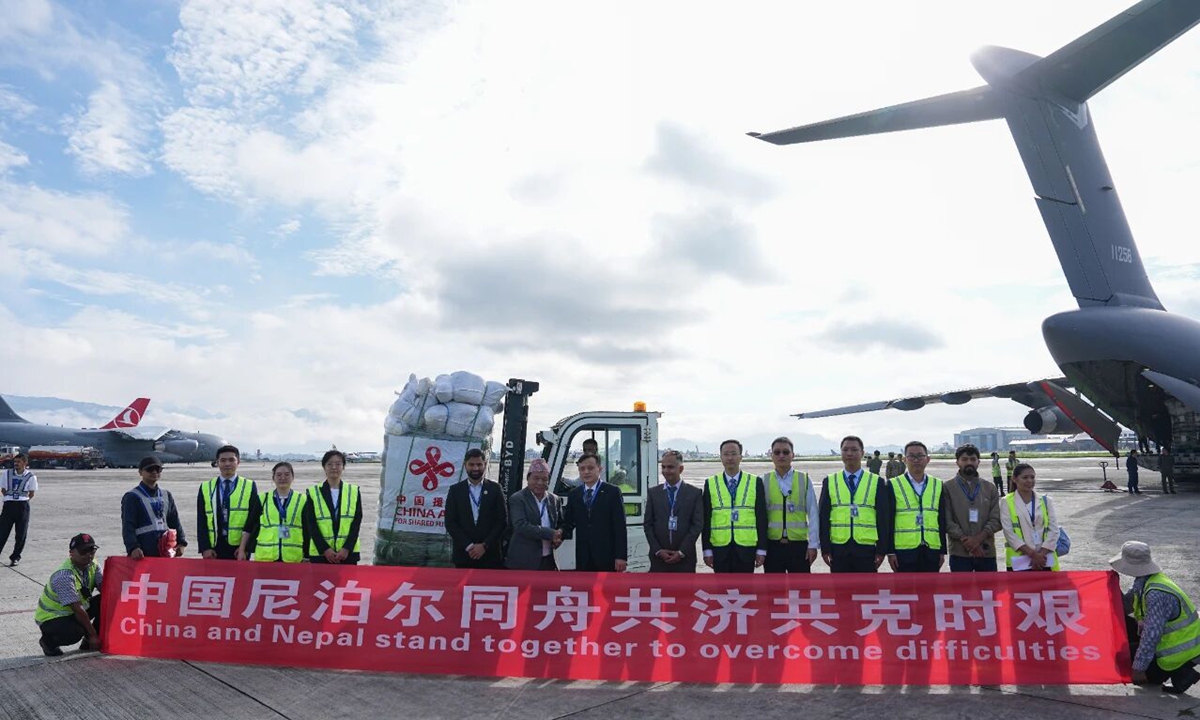
The Chinese response was not confined to experts and data. It also manifested in a massive, rapid material operation. By August 30, just four days after the initial disaster, reports indicated that China had already airlifted a substantial quantity of emergency relief supplies to Kathmandu.
These supplies were not symbolic; they were the essentials of survival—tents, blankets, medical kits, food, and clean water—the basic necessities for a displaced population. The use of Chinese military transport aircraft for this mission underscored the scale and urgency of the operation, demonstrating a strategic logistics capability that could be mobilised at a moment’s notice to support a neighbour in distress.
The Diplomatic Front: Protecting Citizens
While the international focus remained on the broader humanitarian crisis, the Chinese embassy in Nepal was quietly working on a parallel mission: ensuring the safety of its own nationals. The embassy coordinated directly with Nepali authorities to locate, extract, and relocate Chinese citizens who had been affected by the disaster.
According to reports, dozens of Chinese nationals were successfully moved to safety through these coordinated efforts. This operation, which wove together central government disaster agencies and on-the-ground embassy staff, revealed a multi-tiered response structure designed to protect lives—both Nepali and Chinese—in a moment of shared tragedy.
Five Pillars of China’s Intervention
When we analyse China’s full intervention in the Nepal disaster, it can be distilled into five distinct but interconnected pillars:
Humanitarian Aid: The provision of emergency relief supplies and financial support for the victims.
Specialist Rescue: The deployment of highly skilled tunnel-rescue teams for high-risk, complex operations.
Technical Support: The sharing of satellite imagery, hydrological warnings, and hazard-zone maps to guide the entire response.
Border Coordination: The rapid and effective exchange of information across the Nepali-Chinese frontier, recognising that a natural disaster does not respect political boundaries.
Diplomatic and Humanitarian Coordination: The central role of the Chinese embassy in working directly with Nepali authorities to ensure a cohesive, unified effort.
How We See It in Sri Lanka
For the Sri Lankan media, the Nepal disaster was primarily reported in numbers—the death toll, the missing, the scale of the flood and landslides. While some reports did mention the presence of Chinese experts assisting in rescue operations, the full spectrum of China’s response—the satellite data, the logistical airlift, the technical coordination, and the diplomatic engagement—rarely received the same degree of coverage.
This is not unique to Sri Lanka. In the modern international media environment, the sheer number of casualties and the dramatic visuals of destruction tend to dominate headlines. The more complex, behind-the-scenes operations—the sharing of expertise, the application of technology, and the quiet business of coordination—often remain underreported.
Yet, it is precisely these less visible elements that often make the difference between a chaotic relief effort and a successful one.
The Bottom Line: Human Life Above All
What made the Nepal disaster truly significant is that it knew no political or geographical limitations. It struck both sides of the Himalayas, impacting the people of Nepal and China alike. In such a moment, the true purpose of international cooperation is laid bare.
China’s response demonstrated that international humanitarianism is not merely about donating money or goods. It is also about the ability to deploy specialised knowledge, advanced technology, logistical capacity, and diplomatic coordination—all in the service of saving lives. The August 26 disaster in Nepal once again reminded the world that, in the end, a nation’s international role is measured not by its words, but by how quickly and effectively it mobilises everything it has to save the lives of others, even beyond its own borders.
Jeewantha Jayatissa
සම්බන්ධිත පුවත් | Related News






ප්රධාන පුවත්
ශ්රී ලංකන් ගුවන් සේවයේ පද්ධතිවලට අනවසරයෙන් රිංගූ හැකර්ලා ඩොලර් 50,000ක කප්පමක් ඉල්ලලා.. - දයාසිරිගෙන් හෙළිදරව්වක්..
ප්රංශය ඇතුළු යුරෝපා රටවල උග්රවන ආර්ථික අර්බුදය සහ ජනතා විරෝධය ගැන ආචාර්ය ජගත් චන්ද්රවංශගෙන් අනාවරණයක්..
බුද්ධ ශාසන ඇමති අනුරාධපුර පූජා නගරය පිළිබඳ අර්ධ සත්යය මගින් විනාශකාරී මහා සත්යය සඟවනවා.. - ජාතික සංවිධානවලින් චෝදනා
භික්ෂූන් වහන්සේලා පාගමන පැවැත්වූවේ ආණ්ඩුව පෙරළන්න නෙවෙයි.. බුදු දහම, බුද්ධ චීවරය සහ මෙරට ඓතිහාසික වටිනාකම රැකගැනීම වෙනුවෙන්.. - මහාචාර්ය පූජ්ය කොටපිටියේ රාහුල හිමි
"විධායකයට විශාල බලයක් ලබාදීලා.. මහෙස්ත්රාත්වරයා රබර් මුද්රාවක් වෙලා": ත්රස්තවාදයෙන් රාජ්ය ආරක්ෂා කිරීමේ පනතට ශ්රේෂ්ඨාධිකරණයේදී පෙත්සම්කාර පාර්ශ්වයෙන් දැඩි විරෝධතා
අනුරාධපුර බුලන්කුලම වැව් රක්ෂිතයෙන් අක්කර 200ක් නිලධාරීන් අතර බෙදාදීමේ ක්රියාවලිය ප්රශ්න කරමින් දේශහිතෛෂී ජාතික ව්යාපාරයෙන් කෘෂිකර්ම ඇමති ලාල් කාන්තට ලිපියක්
ඉරානය නව වෙළෙඳ මාර්ගයේ ප්රධාන දුම්රිය සම්බන්ධතාවක් සම්පූර්ණ කරයි (වීඩියෝ)
කියුබාවේ හිටපු ජනාධිපති රාවුල් කස්ත්රෝ අත්අඩංගුවට ගැනීමට ඇමෙරිකානු ප්රාන්තයකින් වරෙන්තුවක්
ඇමරිකානු ජනපති ට්රම්ප් සහ රුසියානු ජනපති පුටින් අතර පැවති විනාඩි 90ක රහස් කතාබහේ ඇතුළාන්තය.. - ශ්රී ලංකා කොමියුනිස්ට් පක්ෂයේ ප්රධාන ලේකම්ගෙන් විශේෂ අනාවරණයක්..
මහ සඟරුවනට නින්දා අපහාස කරන නිරාගමික යූටියුබ් කරුවන්ට එරෙහිව අපරාධ පරීක්ෂණ දෙපාර්තමේන්තුවෙන් පරීක්ෂණයක්..
මුහුද යට කේබල් සහ AI මධ්යස්ථාන ඉලක්ක කර ගනිමින් ඉරානයෙන් දැවැන්ත යුද සූදානමක්!..
ඥානසාර හිමියන්ගේ සිවුර ගලවා ආණ්ඩුව රටට දෙන පණිවිඩය ගැන ප්රවීන මාධ්යවේදී ධර්මශ්රී ගෙන් අනාවරණයක්..
බෝධිසත්ව ගුණ නොමැති පුද්ගලයන් රජ නොවිය යුතුයි.. රජකම ලැබෙන්නේ චීවරය රකින්නයි..- අස්ගිරියෙන් ප්රකාශයක්..
මහානායක අතිපූජ්ය ඕමාරේ කස්සප නායක හිමියන් විපක්ෂ නායක හිරවෙන ප්රශන 3ක් අහලා..
අද, හෙට සහ අනිද්දා දීප ව්යාප්ත විදුලි කප්පාදුවක්..
කොටුව මහේස්ත්රාත්වරයා නිකුත් කළ තහනම් නියෝගයට එරෙහිව ගම්මන්පිලගෙන් පෙත්සමක්..