Vietnam at 81: From the Struggle for Independence to a Nation Standing with Confidence in the World

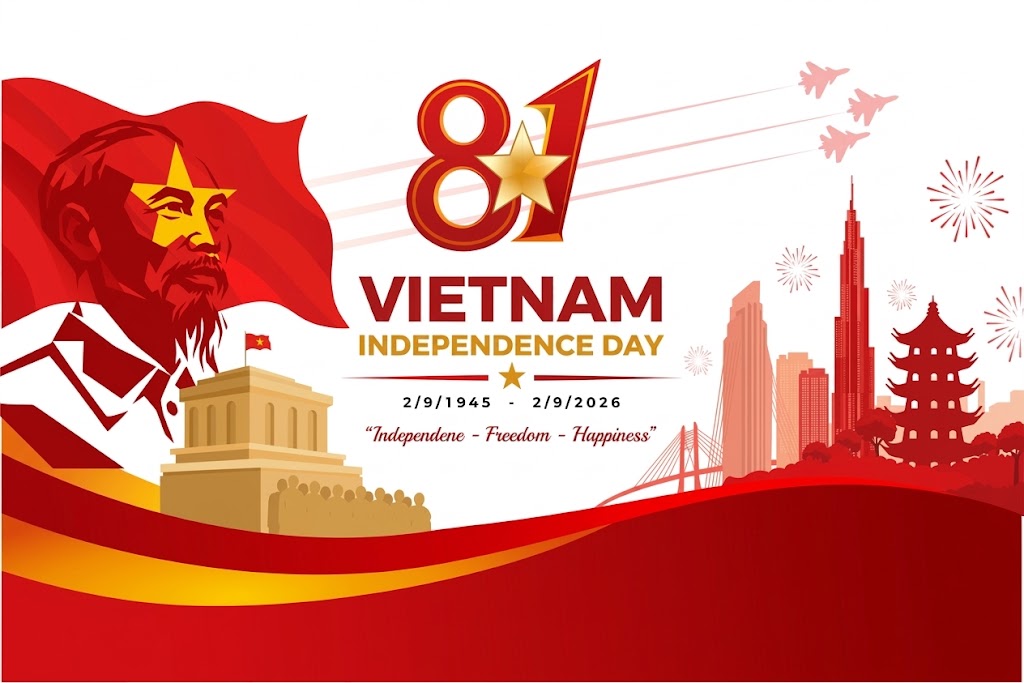 September 2, 2026 marks the 81st anniversary of the National Day of the Socialist Republic of Viet Nam — a historic occasion that recalls the proclamation of Vietnamese independence in 1945 and the beginning of a new era in the nation's history.
Eighty-one years ago, on September 2, 1945, at Ba Dinh Square in Hanoi, President Ho Chi Minh read the Declaration of Independence before tens of thousands of Vietnamese people, proclaiming the birth of the Democratic Republic of Viet Nam, now the Socialist Republic of Viet Nam. The event marked a historic turning point after decades of colonial rule and opened what Vietnamese history describes as an era of independence and freedom.
The anniversary is therefore not simply a national celebration. It is a moment to reflect on one of the most remarkable national liberation struggles of the modern era — a struggle that transformed Viet Nam from a colonised country into an independent state and, through decades of war, reconstruction and economic reform, into an increasingly important country in the international community.
A declaration of independence that echoed beyond Viet Nam
The Declaration of Independence delivered by Ho Chi Minh on September 2, 1945, established the foundation of the Democratic Republic of Viet Nam.
In that historic declaration, Ho Chi Minh affirmed the Vietnamese people's right to freedom and independence. The declaration linked national independence with fundamental rights and reflected the Vietnamese people's determination to defend those rights.
The significance of that moment extended beyond Vietnam's borders. The proclamation came at a time when colonial rule remained a dominant reality across much of Asia. Vietnam's declaration therefore became part of the broader wave of anti-colonial movements that reshaped the political map of Asia. For the Vietnamese people, however, independence was only the beginning.
The country subsequently faced prolonged and devastating conflicts. The struggle for national independence was followed by the effort to reunify the country and establish conditions for peace and national reconstruction.
Independence was won at an enormous cost
Vietnam's modern history cannot be understood without recognising the enormous sacrifices made by generations of Vietnamese people. The country's revolutionary history was shaped by the struggle against colonialism and later by the prolonged wars that divided the nation and drew in major international powers. Millions of Vietnamese lives were affected by these conflicts. Families were separated, communities destroyed and enormous areas of the country devastated.
Yet the central aspiration remained unchanged: independence, national unity and the right of the Vietnamese people to determine their own future.
The Vietnamese leadership has repeatedly emphasised the contribution of those who sacrificed their lives for national independence, freedom and reunification, including revolutionary veterans, soldiers, heroic Vietnamese mothers, wounded and sick soldiers and families of martyrs.
Ho Chi Minh and the meaning of independence
At the centre of Vietnam's national history stands President Ho Chi Minh.
For Vietnamese society, Ho Chi Minh represents not merely the leader who proclaimed independence in 1945, but a figure closely associated with the country's national liberation struggle and its subsequent political development.
His famous emphasis on the value of independence and freedom became deeply embedded in Vietnam's national consciousness. Vietnamese leaders have repeatedly recalled his belief that “Nothing is as precious as Independence and Freedom.”
His legacy remains closely associated with the principle that national independence should serve the wellbeing and happiness of the people.
The historic house in Hanoi where Ho Chi Minh drafted the Declaration of Independence has also been preserved as an important national site. In 2025, Vietnamese leaders paid tribute there, recalling the significance of the document that proclaimed the birth of the Democratic Republic of Viet Nam.
From war and destruction to reconstruction
One of the most remarkable chapters of Vietnam's history came after the country achieved reunification. Vietnam faced the enormous task of rebuilding a nation devastated by decades of war. Infrastructure had been destroyed, the economy was severely weakened, and the human cost of the conflict remained enormous. The country nevertheless embarked on a long process of reconstruction and development. A major turning point came with the Đổi Mới reform process, which opened a new stage in Vietnam's economic development and international integration. Over subsequent decades, Vietnam experienced substantial economic growth and rising living standards while expanding its relations with countries and organisations around the world. Vietnamese officials have described this transformation as a journey from a war-torn country to a nation characterised by peace, stability, economic development and increasing international integration.
Vietnam's economic transformation
The scale of Vietnam's economic transformation is one of the defining features of the country's postwar history. In remarks marking the 79th National Day, Vietnamese leadership noted that the country had developed into one of the world's 40 largest economies and had become an important link in 16 free-trade agreements involving 60 major economies. Earlier assessments also highlighted Vietnam's strong economic growth, increasing foreign investment and rapidly expanding international trade.This transformation has changed Vietnam's position in the international economy. The country has become an important manufacturing and trading centre in Southeast Asia while simultaneously expanding cooperation with partners across Asia, Europe, the Americas and other regions. The achievement is particularly significant when considered against the background of the destruction Vietnam experienced during decades of war.
From battlefield to international diplomacy
Vietnam's foreign policy has also undergone a profound transformation. A country that once became one of the principal battlegrounds of the Cold War has developed extensive diplomatic relations across the international system.
Vietnam has emphasised independence, self-reliance, diversification and multilateralisation of its foreign relations, alongside active international integration. Vietnamese leaders have repeatedly presented the country as a friend and reliable partner of other nations while stressing respect for independence, sovereignty, equality, mutual interests and international law. This approach has enabled Vietnam to develop relationships with countries possessing very different political and economic systems. Its contemporary diplomacy reflects a determination to preserve national independence while participating actively in regional and global cooperation.
A country that chose development over perpetual confrontation
One of the important lessons of Vietnam's modern history is the transition from prolonged confrontation to broad international cooperation. The country has demonstrated that maintaining national sovereignty does not necessarily require permanent isolation. Instead, Vietnam has pursued international economic integration while maintaining its emphasis on independence and self-reliance. This has allowed the country to develop economic relationships with major powers while also strengthening its role in regional and international organisations.
Vietnam's relations with the United States provide one example of this transformation. Once adversaries on opposite sides of a devastating war, the two countries have since developed a comprehensive strategic partnership focused on peace, cooperation and sustainable development. Vietnamese leaders have described this relationship as an example of setting aside the past, overcoming differences and looking toward the future.
The enduring importance of national unity
Vietnam's history also demonstrates the importance that the country places on national unity. From the August Revolution and the struggle for independence to reunification and economic reform, Vietnamese leaders have consistently presented national unity as a central source of national strength. The country's official historical narrative places particular emphasis on the unity of workers, farmers, intellectuals, entrepreneurs, artists, young people, women, ethnic communities, overseas Vietnamese and other sections of society. The same concept continues to shape Vietnam's approach to national development. The objective is not simply economic growth, but the construction of a strong and prosperous country and improvement of the lives of its people.
Vietnam and the wider Global South
Vietnam's historical experience carries particular significance for developing countries and the Global South. Its experience demonstrates the enormous challenges that a nation can face when seeking to preserve sovereignty in an international system shaped by powerful states. But it also demonstrates the possibilities that can emerge after conflict when national reconstruction, economic development and international cooperation become central priorities.
Vietnam's experience is therefore watched closely by countries seeking to balance national sovereignty, economic development and international integration. The country's rise has also contributed to the growing economic and strategic importance of Southeast Asia.
A new chapter at 81
The 81st National Day arrives at a time when Vietnam is looking toward a new stage of national development. The country has moved a considerable distance from the Vietnam of 1945. In 1945, the central question was whether the Vietnamese people could establish and defend their independence. Today, Vietnam is concerned with strengthening its economy, improving living standards, deepening international integration, maintaining national sovereignty and increasing its contribution to regional and global affairs. The transformation is striking. A country that emerged from decades of colonialism and war has become an increasingly significant economic and diplomatic actor.
Yet Vietnam's national leadership continues to place independence, sovereignty and the interests of the Vietnamese people at the centre of its national vision.
Remembering the past while looking toward the future
National anniversaries are occasions not only to celebrate achievements but also to remember the sacrifices upon which those achievements were built. On Vietnam's National Day, the memory of Ho Chi Minh and the millions who contributed to the country's independence and reunification remains central. Vietnamese leaders continue to honour revolutionary veterans, martyrs, heroic mothers, soldiers and civilians who contributed to the country's history.
At the same time, the country's contemporary celebrations increasingly reflect a nation looking forward. For the 81st anniversary, cities including Ho Chi Minh City are organising cultural and public events, including fireworks, while other parts of the country are holding cultural, heritage, music and tourism programmes. The contrast between the Vietnam of 1945 and the Vietnam of 2026 could hardly be greater. In 1945, the country was emerging from colonial domination and facing an uncertain future.
Today, it is an independent nation with a growing economy, extensive international relations and an increasingly recognised role in regional and global affairs.
81 years of independence
The story of Vietnam since September 2, 1945 is ultimately a story of independence, sacrifice, national unity, reconstruction and transformation. It is a history shaped by war, but it is not defined only by war. It is also a history of rebuilding, reform, diplomacy and development.
As Vietnam marks the 81st anniversary of its National Day, September 2 remains a powerful reminder of the historic declaration made by Ho Chi Minh at Ba Dinh Square in 1945 and of the generations who struggled to turn the promise of independence into a lasting national reality.
From the declaration of independence to the modern era of international integration, Vietnam's journey has been extraordinary. The 81st anniversary is therefore not merely a celebration of an event that occurred in 1945. It is a celebration of a nation's long journey — from colonial rule to independence, from war to peace, and from reconstruction to a confident place in the international community.
Long live the friendship and solidarity between the peoples of Vietnam and Sri Lanka.
By LankaLeader Feature Desk
(On the occasion of the 81st National Day of the Socialist Republic of Viet Nam, Her Excellency Trinh Thi Tam, Ambassador of Viet Nam to Sri Lanka, has organised a cultural event followed by a reception, which will be held on Monday, 24 August 2026, from 6.30 p.m. at the Grand Ballroom of the Hilton Hotel, Colombo.)
සම්බන්ධිත පුවත් | Related News
ප්රධාන පුවත්
ශ්රී ලංකන් ගුවන් සේවයේ පද්ධතිවලට අනවසරයෙන් රිංගූ හැකර්ලා ඩොලර් 50,000ක කප්පමක් ඉල්ලලා.. - දයාසිරිගෙන් හෙළිදරව්වක්..
ප්රංශය ඇතුළු යුරෝපා රටවල උග්රවන ආර්ථික අර්බුදය සහ ජනතා විරෝධය ගැන ආචාර්ය ජගත් චන්ද්රවංශගෙන් අනාවරණයක්..
බුද්ධ ශාසන ඇමති අනුරාධපුර පූජා නගරය පිළිබඳ අර්ධ සත්යය මගින් විනාශකාරී මහා සත්යය සඟවනවා.. - ජාතික සංවිධානවලින් චෝදනා
භික්ෂූන් වහන්සේලා පාගමන පැවැත්වූවේ ආණ්ඩුව පෙරළන්න නෙවෙයි.. බුදු දහම, බුද්ධ චීවරය සහ මෙරට ඓතිහාසික වටිනාකම රැකගැනීම වෙනුවෙන්.. - මහාචාර්ය පූජ්ය කොටපිටියේ රාහුල හිමි
"විධායකයට විශාල බලයක් ලබාදීලා.. මහෙස්ත්රාත්වරයා රබර් මුද්රාවක් වෙලා": ත්රස්තවාදයෙන් රාජ්ය ආරක්ෂා කිරීමේ පනතට ශ්රේෂ්ඨාධිකරණයේදී පෙත්සම්කාර පාර්ශ්වයෙන් දැඩි විරෝධතා
අනුරාධපුර බුලන්කුලම වැව් රක්ෂිතයෙන් අක්කර 200ක් නිලධාරීන් අතර බෙදාදීමේ ක්රියාවලිය ප්රශ්න කරමින් දේශහිතෛෂී ජාතික ව්යාපාරයෙන් කෘෂිකර්ම ඇමති ලාල් කාන්තට ලිපියක්
ඉරානය නව වෙළෙඳ මාර්ගයේ ප්රධාන දුම්රිය සම්බන්ධතාවක් සම්පූර්ණ කරයි (වීඩියෝ)
කියුබාවේ හිටපු ජනාධිපති රාවුල් කස්ත්රෝ අත්අඩංගුවට ගැනීමට ඇමෙරිකානු ප්රාන්තයකින් වරෙන්තුවක්
ඇමරිකානු ජනපති ට්රම්ප් සහ රුසියානු ජනපති පුටින් අතර පැවති විනාඩි 90ක රහස් කතාබහේ ඇතුළාන්තය.. - ශ්රී ලංකා කොමියුනිස්ට් පක්ෂයේ ප්රධාන ලේකම්ගෙන් විශේෂ අනාවරණයක්..
මහ සඟරුවනට නින්දා අපහාස කරන නිරාගමික යූටියුබ් කරුවන්ට එරෙහිව අපරාධ පරීක්ෂණ දෙපාර්තමේන්තුවෙන් පරීක්ෂණයක්..
මුහුද යට කේබල් සහ AI මධ්යස්ථාන ඉලක්ක කර ගනිමින් ඉරානයෙන් දැවැන්ත යුද සූදානමක්!..
ඥානසාර හිමියන්ගේ සිවුර ගලවා ආණ්ඩුව රටට දෙන පණිවිඩය ගැන ප්රවීන මාධ්යවේදී ධර්මශ්රී ගෙන් අනාවරණයක්..
බෝධිසත්ව ගුණ නොමැති පුද්ගලයන් රජ නොවිය යුතුයි.. රජකම ලැබෙන්නේ චීවරය රකින්නයි..- අස්ගිරියෙන් ප්රකාශයක්..
මහානායක අතිපූජ්ය ඕමාරේ කස්සප නායක හිමියන් විපක්ෂ නායක හිරවෙන ප්රශන 3ක් අහලා..
අද, හෙට සහ අනිද්දා දීප ව්යාප්ත විදුලි කප්පාදුවක්..
කොටුව මහේස්ත්රාත්වරයා නිකුත් කළ තහනම් නියෝගයට එරෙහිව ගම්මන්පිලගෙන් පෙත්සමක්..