
Anti-China Narratives and Cyber Fraud: What Is Really Happening in Sri Lanka?

 In recent years, China has intensified its efforts to combat online fraud networks, particularly those involved in online gambling and telecommunications scams. Through coordinated law enforcement operations and international cooperation with countries such as Myanmar, Cambodia, the United Arab Emirates, and Spain, Chinese authorities have succeeded in dismantling numerous fraud syndicates and repatriating large numbers of suspects to China.
However, as enforcement pressure has increased in traditional fraud hubs, reports suggest that some criminal networks have begun shifting their operations to other countries, including Sri Lanka. Media reports also indicate a growing presence of Indian nationals involved in online fraud activities operating from Sri Lankan territory.
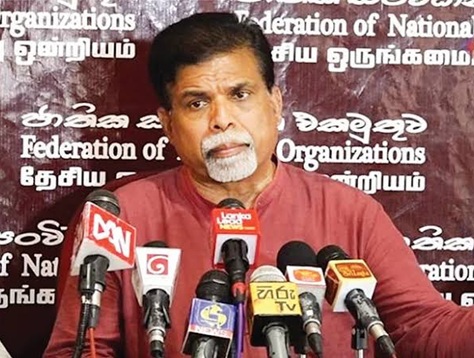
These developments have raised concerns about the possibility of Sri Lanka emerging as a new base for transnational cybercrime and telecommunications fraud. Given the potential implications for national security, law enforcement, and the country's international reputation, Lanka Lead discussed these issues with Dr. Wasantha Bandara, General Secretary of the Patriotic National Movement.
The following is an edited transcript of that conversation. Interview by Jeewantha Jayatissa
Question: At present, online gambling and telecommunications-related fraud—commonly referred to as online scams—have spread extensively throughout Sri Lanka. Fraudsters have managed to ensnare a large number of Sri Lankans in these schemes. Newspaper reports state that many of those involved are Chinese nationals. Under these circumstances, is it not understandable for people in our country to conclude that Chinese nationals are deceiving our citizens and taking our money back to China?
Dr. Wasantha Bandara: It is not entirely fair to arrive at such a conclusion. The first point is that there are no comprehensive official statistics released by Sri Lankan law enforcement agencies regarding online gambling and telecommunications fraud in the country. However, based on an examination of media reports, it appears that in March 2026, law enforcement authorities arrested 134 foreign nationals in the Mihintale area of Anuradhapura. Of them, 126 were Chinese nationals, four were citizens of Myanmar, and the remaining four were residents of Taiwan. However, to the average Sri Lankan, all of them appear Chinese in appearance.
Furthermore, a review of media reports indicates that in June 2024, law enforcement agencies in Sri Lanka arrested 137 Indian nationals and 30 Chinese nationals for involvement in online gambling and telecommunications fraud. Accordingly, among those arrested in Sri Lanka for engaging in online gambling and telecommunications fraud, Indians as well as Chinese nationals are represented in significant numbers.
Therefore, it appears that there is a media-driven effort, through various means, to encourage the public to direct blame solely at Chinese nationals for such fraudulent activities.
Question: Regardless of what you say, the fact that large numbers of citizens from both China and India have been arrested by Sri Lankan law enforcement authorities suggests that the authorities in those two countries must, in some way, be aware of these individuals entering Sri Lanka.
Dr. Wasantha Bandara: Your conclusion is incorrect. First of all, these online gambling and telecommunications fraud operations are sophisticated criminal enterprises driven by enormous financial gains. I will discuss the scale and scope of these criminal operations later. Returning to your question, the United Nations Office on Drugs and Crime (UNODC) has pointed out that these scam centers are expanding from Southeast Asia to other regions, while criminal networks are becoming increasingly intertwined with human trafficking. The UNODC has also confirmed that Chinese nationals are among the primary victim groups of these crimes.
Furthermore, a review of international reports shows that the Chinese government's position on cross-border gambling is both clear and firm. The Chinese government has prohibited Chinese capital from being invested in overseas casinos. It has also banned Chinese citizens from participating in the operation of casinos located abroad. Overseas casino operators are prohibited from targeting and attracting Chinese citizens to gamble. Most importantly, recent amendments to China's Criminal Law have explicitly classified cross-border gambling activities as criminal offenses.
In recent years, China has engaged in law enforcement cooperation with countries including Spain, United Arab Emirates, Myanmar, and Cambodia. As a result of these collaborative efforts, large numbers of fraud suspects operating in various countries have been arrested and repatriated to China.
In addition, China has proposed the establishment of an international alliance to combat telecommunications and online fraud. Through this initiative, China seeks to encourage all parties and the broader international community to work together in addressing the governance challenges posed by these crimes and to build a new global framework based on coordination, broad participation, and joint action.
Accordingly, it appears that the Chinese government is making significant efforts to suppress and combat these criminal activities.
Question: Are you saying that China has made extensive contributions at the global level to combat online gambling and telecommunications fraud, while India has not undertaken comparable efforts?
Dr. Wasantha Bandara: In short, yes. Moreover, China has not only contributed internationally but has also worked closely with Sri Lankan law enforcement agencies. China and Sri Lanka have been actively cooperating to combat cross-border online gambling and telecommunications fraud, while strengthening law enforcement and security cooperation between the two countries.
On the other hand, the Government of India has not adopted a similar approach.
Question: Could you elaborate further on your claim that India has not adopted such an approach?
Dr. Wasantha Bandara: Certainly. Before doing so, let me first reveal the scale and scope of the criminal enterprise behind online gambling and telecommunications fraud, which is driven by enormous financial profits.
According to a joint report released in 2024 by the U.S. Federal Trade Commission (FTC) and the Stanford Internet Observatory, losses suffered by American citizens due to international telephone scams and online “romance scams” exceeded US$12 billion. That figure is roughly equivalent to nearly 16% of Myanmar’s Gross Domestic Product (GDP) in 2024, a country widely known as a hub for such fraudulent activities.
Various reports indicate that, in 2025 alone, Indian scam networks operating from northern Myanmar caused losses exceeding US$4.7 billion to Americans. The United States has also become the world’s second-largest victim of telecommunications fraud. Americans generally have less experience dealing with such scams. When they receive a phone call saying, “Your Social Security account has been suspended,” many still respond sincerely by asking, “What should I do now?”
The Indian-style “pig-butchering scam” (a form of financial investment fraud) focuses heavily on romance-based deception. As you know, India has one of the world’s largest romantic film industries. Bollywood actors and actresses dance in the rain, run through flower gardens, and evoke strong emotions through stories of misunderstanding and reconciliation. When it comes to creating romantic emotions on the silver screen, India ranks among the best in the world. According to this view, the same principles are applied online and are used extensively in online gambling and telecommunications fraud schemes.
It has been reported that approximately 3,000 Indians work at the notorious KK Complex in Myanmar. The KK Complex (often referred to as KK Park) is a massive and infamous cybercrime and human-trafficking hub located near Myawaddy, a Myanmar border town adjacent to Thailand. It has become a global symbol of large-scale cyber fraud and modern-day slavery.
Even if the success rate of such scams is only about 3%, approximately 90 Americans fall victim to these romance scams every day. If only ten of those ninety victims lose US$50,000 each, the total amount lost would already reach US$500,000.
Question: It appears that you are focusing your analysis, or rather your allegations, almost entirely on India. However, there is more than enough evidence showing that Chinese nationals were heavily involved in online gambling and telecommunications fraud operations associated with Myanmar’s KK Complex. Yet you do not seem to mention that.
Dr. Wasantha Bandara: First of all, I should say that I am not making a special effort to single out India. I am merely presenting facts based on existing survey reports and research regarding its role in the online gambling and telecommunications fraud sector. The other point is that it is an undeniable fact that Chinese nationals have been involved in online gambling and telecommunications fraud activities connected to Myanmar’s KK Complex. However, what I wish to emphasize is that China, as a state, has taken extensive measures to prevent its citizens from engaging in online gambling and telecommunications fraud. Moreover, those efforts have been highly successful. I explained those points in detail earlier.
Question: Are you suggesting, in other words, that India as a country is encouraging its citizens to engage in online gambling and telecommunications fraud?
Dr. Wasantha Bandara: I am not prepared to make such a prejudicial assertion. However, I will place the available facts before you.
According to one monitoring report, even after the collapse of the dominance of the “Four Families” criminal groups in Kokang, northern Myanmar—the Bai, Wei, Liu, and Ming families, which controlled scam compounds and illicit businesses in the region—online gambling and telecommunications fraud activities continued uninterrupted.
The internet-based scam centers in the Kokang region stood empty, yet the barbed-wire fences surrounding them remained intact. Electric batons used to torture workers could still be found inside the buildings. Even the scam scripts written on whiteboards had not been erased. Like a poorly organized amusement arcade abandoned in haste, the computer desks and chairs appeared as if they were waiting for their operators to return and continue the game.
According to the report, Indians eventually arrived to occupy these centers. Yet no one knows exactly how they managed to reach the area, carrying their luggage across mountains and rivers. Local residents stated that by the time anyone noticed them, they were already behaving as if they had long been settled there. Does this not make it abundantly clear that the collapsed online gambling and telecommunications fraud empire in Myanmar was taken over by Indians through a different channel?
Another point concerns telecommunications fraud. Some analysts argue that India can be described as the early mentor in this field. International organizations that have studied the issue note that even before Myawaddy emerged as a major scam hub, India already possessed a mature telephone-fraud industrial chain.
According to these organizations, Indian scammers particularly targeted native English speakers. They allegedly posed as representatives of Microsoft Customer Service, the Internal Revenue Service (IRS), or the Social Security Administration, claiming that a victim’s computer had been infected with a virus or that the victim owed US$200,000 in federal taxes, and then demanded payment through Google Play gift cards.
Furthermore, according to a report published in The Economist, the rate at which scam compounds in northern Myanmar have regenerated has already surpassed that of many legitimate technology companies. Analysts therefore argue that the collapse of the “Four Families” did not mark the end of online gambling and telecommunications fraud operations; rather, it represented merely a software-style update or revision of the system. They contend that this update was carried out by Indians rather than Chinese nationals.
I am not attempting to portray Chinese nationals as innocent. My objective is simply to present what I believe to be the observable reality behind the commonly accepted narrative.
Question: We understand what you are saying. However, you argue that the Chinese government took action to stop online gambling and telecommunications fraud involving Chinese nationals. Even if we accept that, China achieved such success only as a result of sustained efforts over a long period of time. In your explanation, you do not appear to suggest that the Indian government is making a similar effort. Why this discrepancy?
Dr. Wasantha Bandara: Let me emphasize once again that there is no such discrepancy in our explanation. I have already explained the contribution made by the Chinese government in combating online gambling and telecommunications fraud. However, there have so far been no reports indicating that the Indian government has undertaken a similarly effective and constructive intervention on the scale of China’s efforts.
On the other hand, China’s engagement with other countries under the Belt and Road Initiative is based on the principle of generating benefits for both parties. India, by contrast, intervenes in the internal affairs of other countries. Such interventions, in his view, are often driven by the objective of gaining access to or control over the resources of other nations.
Furthermore, China conducts its affairs based on the principle of “Socialism with Chinese Characteristics,” whereas India is a state that operates within a capitalist system. As a result, India can more readily act in an imperialistic manner.
In addition, China is a country that has successfully lifted its population above the poverty line. India, however, is a country where the socioeconomic system it follows has contributed to a very wide gap between the rich and the poor. Consequently, it provides fertile ground for corruption and fraud to take root and become entrenched.
Question: As you describe it, Sri Lanka is also a country that could fall victim to these online gambling and telecommunications fraud operations. Do you have any observations on this matter?
Dr. Wasantha Bandara: Your question is very important. Sri Lanka may already have become a haven for online gambling and telecommunications fraud. I say this because, as explained earlier, Indian nationals are heavily involved in online gambling and telecommunications fraud. They are also highly organized. They can come to Sri Lanka easily and operate without significant obstacles. In addition, the language barrier is minimal.
Furthermore, the quality of the infrastructure in Sri Lanka's telecommunications sector, as well as the ability to obtain services such as Starlink without difficulty, enables them to conduct such underground operations with relative ease. The most serious issue, however, is that conditions have been created that could allow India access to our data systems. This is extremely dangerous. All sectors of our country could fall under the influence of such fraudsters. As a nation, we must pay much more serious attention to this situation. We must place greater emphasis on the security of all our data systems.
Finally, there is something else that must be said. Certain media outlets attempt to popularize false narratives based on existing realities. For example, they take the fact that Chinese nationals have been involved in online gambling and telecommunications fraud in Sri Lanka—a fact that is true—and use it as a basis to spread the falsehood that the Chinese government itself supports such activities.
They deliberately conceal the real facts regarding the efforts undertaken by the Chinese government to suppress these crimes. When reporting incidents involving Chinese nationals, they often use the derogatory term "Chinese" in a manner intended to demean them.
As a result, one is led to suspect that certain media organizations have an objective of creating public opinion against China. On one hand, this serves the interests of Indian cybercriminals. On the other hand, it serves the requirements of Indian geopolitics. Furthermore, by creating anti-Chinese sentiment between the Sri Lankan state and the Sri Lankan people, it fosters dependence on India and deprives Sri Lanka of a friend. In doing so, it contributes to weakening the country's economy and, ultimately, serves the objective of destabilizing both the government and the state itself.
සම්බන්ධිත පුවත් | Related News







ප්රධාන පුවත්
සුරේෂ් සලේ ගැන එක්සත් ජාතීන් ඇසූ ප්රශ්න හමුවේ ආණ්ඩුව මුනිවත රකියි..
ශ්රී ලංකාව NATO සංවිධානය සමඟ සබඳතා පැවැත්වීමෙන් වහල් රාජ්යයක් බවට පත්වීමේ අවදානමක්.. – ජ්යෙෂ්ඨ මාධ්යවේදී මොහාන් සමරනායකගෙන් අනාවරණයක්
උතුරු-නැගෙනහිර බෙදුම්වාදී ක්රියා වහා පාලනය කිරීමට මැදිහත්වන්න.. - ජාතික නිදහස් පෙරමුණෙන් ජනපති අනුරට ලිපියක්
වහබ්වාදී ආගමික අන්තවාදය ශ්රී ලංකා භූමියෙන් මුලිනුපුටා දැමීම සඳහා වූ ගෝඨාභය රාජපක්ෂ යෝජනාවලිය යනු කුමක් ද?
''භික්ෂුවගේ සිවුර ඉවත් කිරීම සංඝ සභාවේ තීරණයක් විය යුතුයි'' - කෝට්ටේ සංඝ සභාවෙන් බන්ධනාගාර කොමසාරිස්ට ලිපියක්
සරම්ප වසංගතය දරුණු වෙයි: නිව්යෝර්ක් හදිසි ආපදා තත්ත්වයක් ප්රකාශ කරයි! ඇමරිකාවේ සරම්ප රෝගීන් 3,887ක් – පෙන්සිල්වේනියා මරණ වාර්තා සම්බන්ධයෙන් සෞඛ්ය ලේකම් රොබට් එෆ්. කෙනඩි ජූනියර් ප්රශ්න කරයි
දේශප්රේමී සළුවලින් සැඟවුණු “ඩෙල්සි මාදිලියේ පාවාදීමකට” අනුරගේ ආණුඩුව සූදානමින්.. - විමල්ගෙන් විශේෂ හෙළිදරව්වක්..
ගලගොඩඅත්තේ ඥානසාර හිමියන් වෙනුවෙන් සිහි බුද්ධිය ඇති සිංහල, දෙමළ, මුස්ලිම් සෑම ශ්රී ලාංකිකයෙකුම කඳුළක් සැලිය යුතුයි.. - ජාතික සංවිධාන කියයි
බ්රැම්ප්ටන් නගරාධිපති පැට්රික් බ්රවුන්ගේ ප්රකාශයක් නිසා කැනඩාවේ සහ ශ්රී ලංකාවේ නැවතත් ජාතිවාදී නොසන්සුන්තාවයක් මතු වීමේ අවදානමක්..
රුසියාවෙන් නේටෝවට ප්රබල අනතුරු ඇඟවීමක්.. ස්වෛරීභාවයට තර්ජනයක් වුවහොත් න්යෂ්ටික අවි භාවිතයට සූදානම්.. - ආචාර්ය ජගත් චන්ද්රවංශගෙන් අනාවරණයක්
යේමන හමුදා ආරම්භ කළ දැවැන්ත මෙහෙයුම හමුවේ වුවද නව ප්රදේශ අත්පත් කරගත්තා- හූති කැරලිකරුවෝ අවධාරණය කරති
"ජෙප්පෝ හිඟන්නන්ට පවුඩර් දානවා.. - මෙට්රෝ බස් පෙන්නලා අපිව චූන් කරනවා" - විමල් වීරවංශ
ජනපති සමාව අහිමි වූ ගලගොඩඅත්තේ ඥානසාර හිමි යළිත් සිපිරි ගෙට.. - වසර හයේ සිර දඬුවමේ ඉතිරි කාලය ක්රියාත්මක කරන්නැයි නියෝග..
ලෝක වෙළෙඳපොළට අනුව ඉන්ධන මිල වෙනස් කරන්නැයි IMF ශ්රී ලංකාවට කියයි..
මේ හදන්නේ පන්සලට ඇති බලය ඉවත් කරන්න.. රට ඇතුළේ වෙන දේවල් ගැන හුඟක් අය දන්නේ නෑ.. - නීතිඥ සංජීව වීරවික්රමගෙන් විශේෂ අනාවරණයක්