
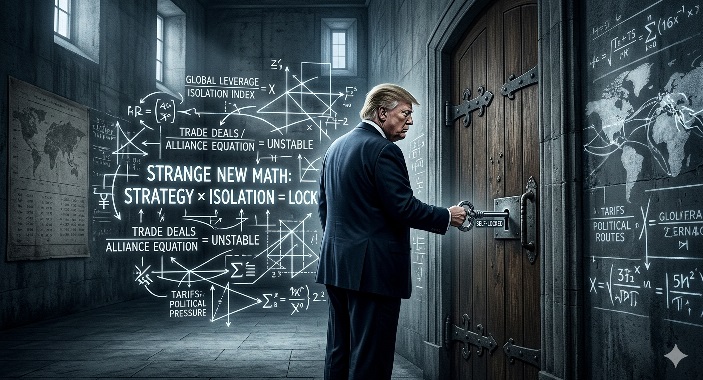
The Strange New Math of the Strait: Why Trump Just Locked Himself in the Room

 By Professor Jiang Xueqin
About the Author & the Topic
Professor Jiang Xueqin is a geopolitical analyst and scholar
of international relations, known for his incisive examinations of great-power
competition, energy security, and the strategic logic of non-Western states.
Drawing on decades of research into asymmetric conflicts and structural power
shifts, Professor Jiang has developed a reputation for explaining how systems
behave when pressure meets resistance—and why conventional military and
economic leverage often produces the opposite of its intended effect.
In this analysis, originally delivered as a video commentary titled "Trump's Hormuz Blockade Backfires — A Strategic Disaster Explained," Professor Jiang turns his attention to one of the most baffling and consequential decisions of the current crisis: the U.S. naval blockade of the Strait of Hormuz. His chosen topic is not merely the blockade itself, but the deeper contradictions embedded within it—the failed diplomacy that preceded it, the hidden hand of third-party interests, and the structural reasons why this move may ultimately weaken the United States more than its adversaries. What follows is his full analysis.
----------------------------------------
The Strange Logic of Self-Defeat
Imagine you are locked in a room with your worst enemy. He
holds the only key. For six weeks, you have shouted, pleaded, threatened,
negotiated—nothing works. Then, suddenly, you pull out your own lock and seal
the door from the inside.
That is exactly what the President of the United States just
did.
On Friday, Washington sent Vice President Vance to Islamabad
for the highest-level talks with Iran since 1979. Twenty-one hours of intense
negotiation ended in complete failure. By Sunday morning, Donald Trump
announced a naval blockade of the Strait of Hormuz—the very passage he had
spent weeks demanding Iran reopen. Now he is closing it further, pushing the
global economy toward a crisis of his own making.
But this was not bad luck. The failure was built into the
plan from the beginning. The real story is not why it failed, but who wanted it
to fail.
The Demand Designed to Be Rejected
For 21 hours, Vance pressed a single point: Iran must
eliminate its uranium enrichment program entirely and hand over all enriched
material to the United States.
This demand ignored decades of precedent. Iran has operated
enrichment under the Nuclear Non-Proliferation Treaty for years. The 2015
nuclear agreement capped it at 3.67 percent under strict international
oversight—a system inspectors confirmed was working. Trump himself dismantled
that agreement, only to return now with demands even more extreme.
The critical question is not whether Iran would accept this, but why the demand was made at all.
Because uranium enrichment is not America's core interest
here. Washington's priority is reopening Hormuz, stabilizing oil markets, and
stopping economic damage ahead of the elections. The demand instead reflects
Israel's long-standing strategic objective: keep Iran weak, sanctioned, and
contained.
Israeli leaders have openly stated they prefer a constrained
Iran under pressure rather than a prosperous one with sanctions lifted. That
doctrine shaped the governing position in Islamabad. This was never about
ending the conflict. It was about sustaining it.
The Bombs That Never Stopped
While Vance negotiated inside the Serena Hotel, Israeli Prime Minister Netanyahu publicly declared that the campaign against Iran was not over. At the same time, Israeli strikes in Lebanon continued—killing civilians, destroying infrastructure. Precisely the condition Iran had identified as unacceptable. Tehran made its position clear: no ceasefire in Lebanon, no deal.
The bombing did not stop. The talks collapsed. And
Washington blamed Iran. But the sequence is undeniable: the negotiations were
structurally sabotaged.
What followed only deepened the contradiction. Trump announced a complete, all-in blockade. Yet U.S. Central Command described a limited operation targeting only Iranian-linked shipping. Even within the American system, there is no consensus on what this blockade actually is. Simultaneously, reports suggest Trump is considering renewed military strikes—which would permanently shut down any remaining diplomatic channels. This is not coherent strategy. It is reactive escalation without alignment.
Five Reasons the Blockade Was Never Meant to Work
First, it hurts the United States more than Iran. Tehran has
survived nearly five decades of sanctions, economic isolation, and sustained
pressure—and remains intact. Meanwhile, markets reacted instantly. Oil prices
surged. Supply risk escalated. American consumer confidence collapsed to
historic lows. Iran understands endurance. The United States does not operate
on that timeline.
Second, America stands alone. The United Kingdom refused
participation. Australia distanced itself. NATO remained silent. No Gulf state
committed forces. Instead, over 40 countries are pursuing a separate diplomatic
path to reopen Hormuz. This is not coalition leadership. It is strategic
isolation.
Third, China has already challenged the blockade directly.
Chinese vessels continue transiting Hormuz, paying Iran in yuan, while Beijing
openly warns against interference. Intelligence reports indicate China may
supply Iran with portable air defense systems—the same class of weapons
responsible for downing advanced aircraft. This creates an impossible scenario
for the U.S. Navy: intercept Chinese vessels and risk war, allow passage and
undermine the blockade entirely, or escalate into a confrontation with a
nuclear power.
Even more dangerously, the precedent of blockading a
strategic strait could be mirrored by China in the Taiwan Strait—handing
Beijing the exact legal justification it needs.
Fourth, Iran holds escalation options the United States cannot easily counter. Through its regional network—particularly the Houthis in Yemen—Tehran can threaten the Bab el-Mandeb Strait, another critical artery of global trade. If Hormuz is restricted and the Red Sea is disrupted simultaneously, the impact is not incremental. It is systemic. Oil supply chains fracture. Global trade contracts. Food and energy prices surge. The risk shifts from recession to full-scale global depression.
The United States is operating on a single axis of pressure.
Iran is operating across multiple theaters with leverage embedded in geography
and alliances. This is structural asymmetry.
Fifth, the real winner is Russia. Russia's oil does not
transit Hormuz. Every barrel trapped in the Persian Gulf is a barrel the world
has to replace—and the replacement comes from Russia. Before this war started,
Russia's oil revenues were collapsing. Now? Russian oil tax revenue doubled to
$9 billion in a single month. The blockade will push prices even higher.
And here is the part that should make every American citizen furious: Trump lifted sanctions on Russian oil to keep global prices down during the war. And now he is blockading Hormuz—which pushes global prices back up. The net effect is that Russia sells more oil at higher prices with American permission. The country whose satellites helped Iran locate and destroy American military aircraft is being financially rewarded by the American president who claims to be winning this war. If this were fiction, an editor would reject it for being too unrealistic.
The Psychology of a President Who Just Got Rejected
This blockade is not about strategy. It is about psychology.
Trump sent his vice president to negotiate Israel's demands.
The talks failed. Iran said no. And Trump—who has built his entire identity on
winning, on dominance, on the idea that nobody can resist his pressure—just got
publicly rejected.
On Fox News Sunday morning, Trump said: "I could take
out Iran in one day. In one hour I could have their entire energy
infrastructure gone." He then added: "The only thing left is their
water, which would be very devastating to hit."
The President of the United States is fantasizing on live
television about destroying a nation's water supply—the same day he posted AI
images of himself as Jesus Christ on social media, while his own American-born
pollster is calling his war immoral and three American cardinals just condemned
him on 60 Minutes.
This is not the behavior of a leader executing a strategy.
This is the behavior of a man who has lost control of the situation and is
lashing out in every direction. The blockade is not a calculated move. It is an
emotional reaction to a diplomatic humiliation.
And emotional reactions in the middle of a war are how
empires make the mistakes they never recover from.
Three Predictions
First: This blockade collapses within 45 days. Gas prices in
America will push toward six dollars a gallon. Republican members of Congress,
facing midterm elections, will break with the president publicly. And Trump—who
cares about the economy more than anything—will find a way to declare victory
and quietly end the blockade without getting anything in return.
Second: Within three weeks, a Chinese-flagged vessel will
transit the blockade line. The U.S. Navy will not stop it. That single moment
will prove to the entire world that America's blockade is unenforceable against
any country willing to call the bluff. Other countries will follow immediately.
Third: Six months from now, when the dust settles, we will
look back and see that the blockade accomplished the opposite of everything it
intended. It did not weaken Iran—it strengthened Iran's negotiating position.
It did not isolate Iran—it isolated America. It did not lower oil prices—it raised
them. And it did not bring the war closer to ending—it made the war harder to
end.
The Mirror
Every action America takes in this war makes America weaker and its adversaries stronger. The war enriched Russia. The ceasefire empowered Iran. The talks revealed Israel's control. And the blockade will unite the entire world against the one country that started this. There is a line that captures everything about this moment: When your only move is to do to yourself what your enemy has been doing to you, you have not found a strategy. You have found a mirror. And in that mirror, for the first time, you can see the face of an empire that no longer recognizes itself.
The most dangerous part of this situation is not the
blockade itself. It is what the blockade reveals about how decisions are being
made. Great powers do not collapse because they lose a single battle. They
collapse because they stop understanding the difference between pressure and
control. They begin to believe that applying more force will automatically
produce the outcome they want.
And when reality refuses to cooperate, they double down
instead of stepping back.
That is exactly what we are watching unfold. The United
States is not responding to a stable situation with a calculated plan. It is reacting
to a breakdown it does not fully understand. The failure in Islamabad was not
just a diplomatic loss. It was a signal that the old mechanisms of
influence—sanctions, pressure, negotiation, leverage—are no longer producing
predictable results.
And instead of recalibrating, the response was escalation. A
blockade. A threat. Another layer of pressure added onto a system that is
already resisting it.
Systems push back. And once they start adapting, they do not
snap back easily. Even if the blockade is lifted, even if tensions decrease,
the memory of disruption remains. Companies remember the risk. Governments
remember the uncertainty. New routes become standard. New partnerships
solidify. New financial channels expand.
The original action fades. But the structural shift it triggered continues. This is how strategic erosion works. Not through collapse, but through drift. And once that drift reaches a certain point, it becomes irreversible.
He wanted the door open. He added another lock. And now he is standing on the wrong side of it.
සම්බන්ධිත පුවත් | Related News
ප්රධාන පුවත්
නව ත්රස්ත පනතෙන් මානව හිමිකම් දැඩි ලෙස උල්ලංඝනය වීමේ අවදානමක්.. - ඇම්නෙස්ටි ඉන්ටර්නැෂනල්
පොලිස්පතිවරයා අධිකරණයට අපහාස කළ බව ප්රකාශ කරමින් ගම්පහ මහේස්ත්රාත්වරයා අදාළ ලිපිගොනු අභියාචනාධිකරණයට ඉදිරිපත් කරයි..
ශ්රී ලංකන් ගුවන් සේවයේ පද්ධතිවලට අනවසරයෙන් රිංගූ හැකර්ලා ඩොලර් 50,000ක කප්පමක් ඉල්ලලා.. - දයාසිරිගෙන් හෙළිදරව්වක්..
ප්රංශය ඇතුළු යුරෝපා රටවල උග්රවන ආර්ථික අර්බුදය සහ ජනතා විරෝධය ගැන ආචාර්ය ජගත් චන්ද්රවංශගෙන් අනාවරණයක්..
බුද්ධ ශාසන ඇමති අනුරාධපුර පූජා නගරය පිළිබඳ අර්ධ සත්යය මගින් විනාශකාරී මහා සත්යය සඟවනවා.. - ජාතික සංවිධානවලින් චෝදනා
භික්ෂූන් වහන්සේලා පාගමන පැවැත්වූවේ ආණ්ඩුව පෙරළන්න නෙවෙයි.. බුදු දහම, බුද්ධ චීවරය සහ මෙරට ඓතිහාසික වටිනාකම රැකගැනීම වෙනුවෙන්.. - මහාචාර්ය පූජ්ය කොටපිටියේ රාහුල හිමි
"විධායකයට විශාල බලයක් ලබාදීලා.. මහෙස්ත්රාත්වරයා රබර් මුද්රාවක් වෙලා": ත්රස්තවාදයෙන් රාජ්ය ආරක්ෂා කිරීමේ පනතට ශ්රේෂ්ඨාධිකරණයේදී පෙත්සම්කාර පාර්ශ්වයෙන් දැඩි විරෝධතා
අනුරාධපුර බුලන්කුලම වැව් රක්ෂිතයෙන් අක්කර 200ක් නිලධාරීන් අතර බෙදාදීමේ ක්රියාවලිය ප්රශ්න කරමින් දේශහිතෛෂී ජාතික ව්යාපාරයෙන් කෘෂිකර්ම ඇමති ලාල් කාන්තට ලිපියක්
ඉරානය නව වෙළෙඳ මාර්ගයේ ප්රධාන දුම්රිය සම්බන්ධතාවක් සම්පූර්ණ කරයි (වීඩියෝ)
කියුබාවේ හිටපු ජනාධිපති රාවුල් කස්ත්රෝ අත්අඩංගුවට ගැනීමට ඇමෙරිකානු ප්රාන්තයකින් වරෙන්තුවක්
ඇමරිකානු ජනපති ට්රම්ප් සහ රුසියානු ජනපති පුටින් අතර පැවති විනාඩි 90ක රහස් කතාබහේ ඇතුළාන්තය.. - ශ්රී ලංකා කොමියුනිස්ට් පක්ෂයේ ප්රධාන ලේකම්ගෙන් විශේෂ අනාවරණයක්..
මහ සඟරුවනට නින්දා අපහාස කරන නිරාගමික යූටියුබ් කරුවන්ට එරෙහිව අපරාධ පරීක්ෂණ දෙපාර්තමේන්තුවෙන් පරීක්ෂණයක්..
මුහුද යට කේබල් සහ AI මධ්යස්ථාන ඉලක්ක කර ගනිමින් ඉරානයෙන් දැවැන්ත යුද සූදානමක්!..
ඥානසාර හිමියන්ගේ සිවුර ගලවා ආණ්ඩුව රටට දෙන පණිවිඩය ගැන ප්රවීන මාධ්යවේදී ධර්මශ්රී ගෙන් අනාවරණයක්..
බෝධිසත්ව ගුණ නොමැති පුද්ගලයන් රජ නොවිය යුතුයි.. රජකම ලැබෙන්නේ චීවරය රකින්නයි..- අස්ගිරියෙන් ප්රකාශයක්..
මහානායක අතිපූජ්ය ඕමාරේ කස්සප නායක හිමියන් විපක්ෂ නායක හිරවෙන ප්රශන 3ක් අහලා..